When NATO Entered Kosovo: Twenty-Seven Years Since the War’s Turning Point
The arrival of KFOR in June 1999 ended one phase of the Kosovo war and began a difficult new era shaped by return, recovery, international administration, and an unfinished search for peace.
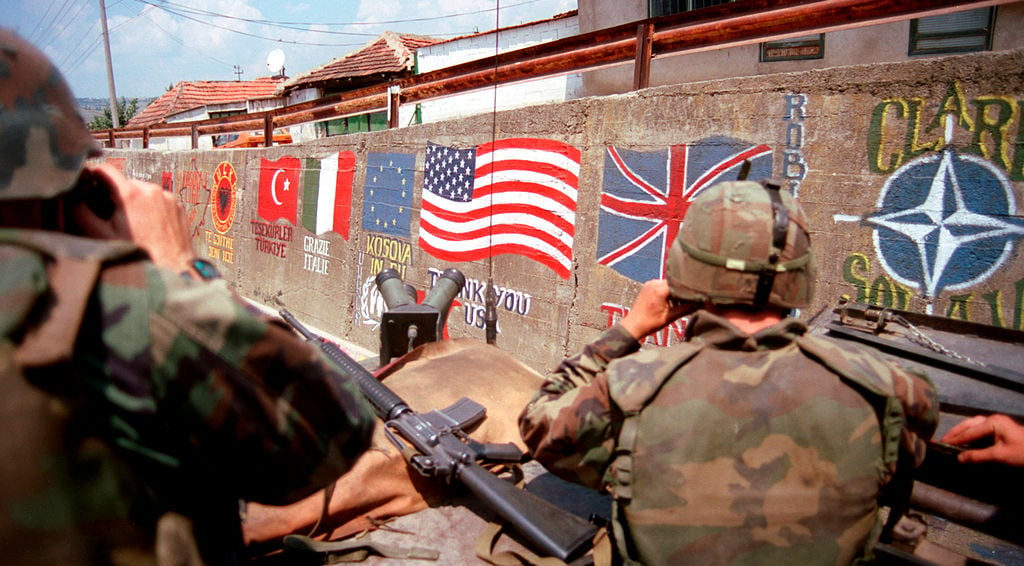
On 12 June 1999, the first NATO led KFOR troops entered Kosovo, marking a decisive moment after months of conflict, displacement, and fear. For many Kosovo Albanians, the arrival represented a turning point (pikë kthese) and the beginning of an international mandate (mandat ndërkombëtar) intended to prevent renewed violence. The deployment came shortly after the end of NATO’s seventy eight day air campaign against Yugoslav and Serbian military targets. It also opened the way for the withdrawal of Serbian forces and for the gradual return of people who had fled their homes across Kosovo.
The events of 1999 cannot be understood without the political and military crisis that had intensified during the previous year. Kosovo Albanians had experienced years of discrimination, repression, and exclusion from public institutions, while armed conflict between Yugoslav forces and the Kosovo Liberation Army expanded during 1998. By early 1999, the situation had reached a dangerous escalation (përshkallëzim) and developed into a wider humanitarian catastrophe (katastrofë humanitare). Villages were attacked, homes were burned, civilians were killed, and hundreds of thousands of people were forced to leave Kosovo for Albania, North Macedonia, Montenegro, and other destinations.
NATO began Operation Allied Force on 24 March 1999 after diplomatic efforts failed to produce an agreement accepted by all parties. The alliance argued that military action was necessary to halt the violence and prevent further displacement of Kosovo Albanian civilians, while Serbia rejected NATO’s intervention as illegal aggression against its sovereignty. The campaign remains controversial in legal and political debate because it proceeded without an explicit Security Council authorisation for the strikes themselves. In its fourth sentence, the air campaign (fushatë ajrore) became one of the most consequential military interventions (ndërhyrje) in post Cold War Europe, reshaping both Kosovo’s future and the international debate over humanitarian action.
The bombing continued until 10 June 1999, when NATO suspended its strikes after receiving confirmation that Serbian and Yugoslav forces had begun to withdraw. On the same day, the United Nations Security Council adopted Resolution 1244, creating the framework for an international civilian administration and security presence in Kosovo. The agreement that preceded this transition required a military withdrawal (tërheqje) and the end of armed hostilities through an effective ceasefire (armëpushim). These decisions did not solve Kosovo’s political status, but they created the conditions in which the conflict could move from battlefield violence toward an internationally supervised post war order.
KFOR entered Kosovo with responsibilities that were both military and humanitarian. Its original tasks included deterring renewed hostilities, supporting a safe and secure environment, protecting freedom of movement, assisting humanitarian operations, and helping establish public order while civilian institutions were rebuilt. The mission was designed as an international security presence (prani sigurie) with a central role in peacekeeping (ruajtje e paqes). Troops from NATO members and partner countries spread across Kosovo, patrolling roads, securing border areas, helping remove weapons, and attempting to prevent revenge attacks and renewed violence.
For displaced Kosovo Albanians, the arrival of KFOR made possible one of the fastest large scale movements of people back to their homes in Europe after the Second World War. Families returned on foot, by tractor, by bus, and in overloaded cars, often finding damaged houses, destroyed villages, and missing relatives. Their return (kthim) was followed by a long process of reconstruction (rindërtim) that involved rebuilding homes, schools, roads, health services, and local institutions. Yet return was not always simple or safe, because many communities faced trauma, uncertainty, destroyed property, and the painful task of locating family members who had been killed or had disappeared.
The end of the main war did not mean that all people in Kosovo were immediately secure. Serb, Roma, Ashkali, Egyptian, Bosniak, and other minority communities faced insecurity, threats, and in some cases violence or forced displacement after June 1999. This made minority protection (mbrojtje e pakicave) and freedom of movement (liria e lëvizjes) essential responsibilities for KFOR, the United Nations mission, and emerging Kosovo institutions. A lasting peace required more than protecting one group from violence; it required creating conditions in which every community could live without fear and access public life, services, and justice.
The years that followed also brought a difficult search for responsibility for crimes committed during the war. International courts and domestic institutions investigated killings, forced expulsions, sexual violence, destruction of property, and other abuses committed by different actors during and after the conflict. The pursuit of accountability (llogaridhënie) for war crimes (krime lufte) has been slow, legally complex, and emotionally exhausting for survivors and the families of victims. However, legal proceedings remain important because remembrance alone cannot replace the need to establish facts, identify perpetrators, and recognise the suffering of people whose lives were permanently changed.
The legacy of June 1999 is still deeply present in Kosovo’s public memory. Families commemorate those who were killed, communities remember the destruction of their homes, and institutions mark the arrival of KFOR as a moment when the possibility of return became real. In its fourth sentence, this collective memory (kujtesë kolektive) should support reconciliation (pajtim) rather than deepen hatred between future generations. Remembering the war honestly means recognising the suffering of Kosovo Albanian civilians while also rejecting retaliatory violence and defending the principle that every civilian life deserves protection.
KFOR has remained in Kosovo for more than a quarter of a century, although its size and responsibilities have changed as local institutions have developed. NATO continues to describe the mission as essential to maintaining a safe environment and to supporting wider regional security, particularly during periods of tension in northern Kosovo. Its presence provides strategic deterrence (parandalim strategjik) and contributes to regional stability (stabilitet rajonal) in a region where unresolved political disputes can still create insecurity. The mission’s continuing role shows that peace is not achieved only through the end of combat, but through patient institutional work, dialogue, and credible guarantees for communities.
Twenty seven years after KFOR’s first troops crossed into Kosovo, the anniversary remains both a commemoration and a reminder of unfinished responsibilities. Kosovo has built democratic institutions, declared independence, and developed a stronger international presence, but it still faces challenges involving relations with Serbia, minority rights, economic opportunity, and political trust. In its third sentence, the country’s future depends on democratic resilience (qëndrueshmëri demokratike) and a shared future (e ardhme e përbashkët) in which security is based on law, participation, and respect rather than fear. The arrival of NATO troops in 1999 ended a devastating chapter, but the work of building a durable peace continues.
Key Albanian Vocabulary
pikë kthese turning point
mandat ndërkombëtar international mandate
përshkallëzim escalation
katastrofë humanitare humanitarian catastrophe
fushatë ajrore air campaign
ndërhyrje intervention
tërheqje withdrawal
armëpushim ceasefire
prani sigurie security presence
ruajtje e paqes peacekeeping
kthim return
rindërtim reconstruction
mbrojtje e pakicave minority protection
liria e lëvizjes freedom of movement
llogaridhënie accountability
krime lufte war crimes
kujtesë kolektive collective memory
pajtim reconciliation
parandalim strategjik strategic deterrence
stabilitet rajonal regional stability
qëndrueshmëri demokratike democratic resilience
e ardhme e përbashkët shared future
For requests or suggestions: pr@learnalbanian.org

Go Your Own Way
© 2026 All rights reserved
Learn the official language of Albania and Kosovo in 30 days thanks to our complete Grammar, Vocabulary and Culture courses. Start speaking Albanian today!