ALBANIAN GRAMMAR
MASTER THE RULES
MASTER ALBANIAN GRAMMAR
This Grammar Section is designed to help you understand the most important rules of Albanian quickly and clearly, so you can begin forming your own sentences from the very first day. Unlike other courses that burden you with abstract theory, our method focuses on the essentials that will help you speak Albanian confidently and naturally—starting today.
In the lessons ahead, you’ll explore everything you need to know about Albanian grammar, from basic sentence structure and verb conjugation to more advanced topics like noun cases, definiteness, and verb moods. Every rule is explained with clear and practical examples to help you not only understand it but also remember and use it in real conversations. We recommend starting with the 2000 most essential Albanian words—this will make it much easier to follow the grammar examples and build your fluency step by step.
The grammar topics covered include the Albanian alphabet, noun cases, the definite and indefinite forms, personal pronouns and prepositions. You’ll also study adverbs, adjectives, the present, past, and future tenses, as well as the imperative, passive, negation, sentence structure, questions and relative clauses. Click on any section title to jump to the topic that interests you most, or start from the beginning and let your knowledge grow naturally.
Start creating your own sentences in Albanian today!

Albanian Pronunciation
The Albanian alphabet is one of the clearest and most regular parts of the language. Modern standard Albanian is written with the Latin alphabet, but it uses several special letter combinations and one special letter, ç, to represent sounds that are important in Albanian. Once learners understand how each letter works, reading Albanian becomes much easier, because Albanian spelling is mostly phonetic. This means that words are generally pronounced as they are written, and written as they are pronounced.
The modern Albanian alphabet has thirty-six letters. Some of these are single letters, such as a, b, d, e, and m. Others are digraphs, which means two written letters represent one sound. Examples include dh, gj, ll, nj, rr, sh, th, xh, and zh. These digraphs are treated as full letters of the alphabet, not simply as random combinations of two letters.
For example, sh is not pronounced as s plus h. It represents one sound, similar to English “sh” in “ship.” In the same way, dh represents a single sound, similar to the “th” in English “this.” This is very important for pronunciation, spelling, dictionary order, and learning vocabulary.
shqip
Albanian
gjuha shqipe
the Albanian language
alfabeti shqip
the Albanian alphabet
Albanian learners should not try to pronounce every written letter separately when they see a digraph. A word such as shqip begins with the sound sh, followed by q, then i, then p. It is not pronounced as separate English-style s and h sounds.
The Albanian Alphabet
The Albanian alphabet contains the following letters: a, b, c, ç, d, dh, e, ë, f, g, gj, h, i, j, k, l, ll, m, n, nj, o, p, q, r, rr, s, sh, t, th, u, v, x, xh, y, z, and zh.
Because Albanian has thirty-six letters, learners should not assume that it works exactly like English, Italian, Spanish, or another Latin-script language. Some letters look familiar but are pronounced differently. Other letters, especially the digraphs, may look like two letters to English speakers but function as one Albanian letter.
A very important feature of Albanian is that each letter usually has a stable sound. This makes Albanian reading easier than English reading. In English, the letter “a” can have different sounds in “cat,” “name,” “father,” and “about.” In Albanian, the letter a is much more consistent.
mal — mountain
natë — night
bar — grass
djalë — boy
This regularity helps learners build confidence. Once you learn the Albanian sound of a, you can recognize it in many different words. The same applies to most other letters.
Vowels in Albanian
Albanian has seven vowel letters: a, e, ë, i, o, u, and y. These vowels are extremely important because they shape the rhythm and sound of the language. Learners who pronounce the vowels clearly will usually be understood more easily, even if their grammar is still developing.
The vowel a is usually pronounced like “a” in “father,” but shorter and cleaner. It is an open sound and should not become the English sound in “cat.”
atë — that
marr — I take
bardhë — white
Ai ka një makinë.
He has a car.
The vowel e is usually pronounced like “e” in “bed,” but often clearer and less relaxed than in English.
emër — name
det — sea
verë — summer; wine
Emri im është Arben.
My name is Arben.
The vowel ë is one of the most important Albanian sounds. It is often pronounced like a soft “uh” sound, similar to the neutral vowel in English “sofa.” In some positions, especially at the end of words, it can be very light or even barely heard in fast speech, but it still matters for spelling and grammar.
nënë — mother
vajzë — girl
shtëpi — house
Nëna është në shtëpi.
The mother is at home.
The vowel i is pronounced like “ee” in “see,” but normally shorter.
mirë — good; well
ditë — day
libër — book
Dita është e bukur.
The day is beautiful.
The vowel o is pronounced like “o” in “more” or “for,” but without turning into a long English diphthong.
motër — sister
dorë — hand
botë — world
Motra ime lexon një libër.
My sister is reading a book.
The vowel u is pronounced like “oo” in “food,” but usually shorter and tighter.
unë — I
bukë — bread
punë — work
Unë kam shumë punë.
I have a lot of work.
The vowel y is often difficult for English speakers. It is similar to the French u in tu or the German ü in Tür. To pronounce it, shape your lips as if you were saying u, but try to say i with the tongue.
dy — two
yll — star
sy — eye
Unë kam dy libra.
I have two books.
The sound y should not be pronounced like English “why.” It is a real vowel, not a consonant plus vowel. This distinction is important because words can change meaning if i, u, and y are confused.
Consonants in Albanian
Albanian consonants are mostly regular, but several require special attention. Some are familiar to English speakers, while others are closer to sounds found in Greek, Italian, Slavic languages, Turkish, or other Balkan languages.
The letter b is pronounced like English “b.”
bukë — bread
burrë — man; husband
bukur — beautiful
Buka është e freskët.
The bread is fresh.
The letter c is pronounced like “ts” in “cats,” not like English “c” in “cat” or “city.”
cili — which
copë — piece
caktuar — certain; appointed
Cili libër është yt?
Which book is yours?
The letter ç is pronounced like English “ch” in “chair.”
çaj — tea
çfarë — what
çelës — key
Çfarë do të pish?
What do you want to drink?
The letter d is pronounced like English “d.”
ditë — day
derë — door
djalë — boy
Djali hap derën.
The boy opens the door.
The digraph dh is pronounced like the voiced “th” in English “this,” “that,” or “mother.” It is not pronounced like d plus h.
dhomë — room
dhëmb — tooth
dhe — and; earth
Dhoma është e madhe.
The room is big.
The letter f is pronounced like English “f.”
familje — family
fëmijë — child
fjalë — word
Familja ime është këtu.
My family is here.
The letter g is always hard, like “g” in “go,” not like “g” in “giant.”
gur — stone
gati — ready
gojë — mouth
Ai është gati.
He is ready.
The digraph gj is one of the sounds that learners often need to practise. It is a soft palatal sound, somewhat similar to a very soft “gy” sound. It is not exactly the same as English “j.” The tongue rises toward the hard palate.
gjuhë — language; tongue
gjumë — sleep
gjelbër — green
Gjuha shqipe është e bukur.
The Albanian language is beautiful.
The letter h is pronounced like English “h,” but it should be clear and audible.
hënë — moon
herë — time; occasion
hap — step; I open
Hëna është e ndritshme.
The moon is bright.
The letter j is pronounced like English “y” in “yes,” not like English “j” in “job.”
jam — I am
jetë — life
ju — you
Unë jam student.
I am a student.
The letter k is pronounced like English “k.”
kam — I have
kohë — time
kafe — coffee
Kam kohë sot.
I have time today.
The letter l is a clear “l” sound, similar to the light “l” in many European languages.
letër — letter; paper
lumë — river
lule — flower
Lulja është e kuqe.
The flower is red.
The digraph ll is a darker, stronger “l” sound. English speakers may compare it to the “l” at the end of “ball,” but in Albanian it is a separate letter and can contrast with l.
yll — star
mollë — apple
llambë — lamp
Ylli është në qiell.
The star is in the sky.
The letter m is pronounced like English “m.”
mami — mum
marr — I take
mirë — good; well
Mami është mirë.
Mum is well.
The letter n is pronounced like English “n.”
natë — night
njeri — person; human being
numër — number
Nata është e qetë.
The night is quiet.
The digraph nj is pronounced like Spanish “ñ” in “señor” or Italian “gn” in “lasagna.” It is one single sound.
një — one; a; an
njeri — person
njoh — I know
Unë njoh një mësues.
I know a teacher.
The letter p is pronounced like English “p.”
punë — work
pyes — I ask
pemë — tree
Puna është e rëndësishme.
Work is important.
The letter q is another sound that many learners need to practise carefully. It is a soft palatal consonant, somewhat like a very light “ky” sound. It is not the same as English “ch,” and it is different from ç.
qen — dog
qytet — city
qiell — sky
Qeni është në oborr.
The dog is in the yard.
The letter r is usually a tapped or lightly rolled sound. It is shorter than rr.
rërë — sand
erë — wind; smell
rrugë — road; street
Era është e fortë.
The wind is strong.
The digraph rr is a stronger rolled “r.” It is pronounced with more vibration than r. The difference between r and rr can change meaning, so learners should practise it.
rrugë — road; street
rri — I stay
rreth — around; circle
Unë rri në shtëpi.
I stay at home.
The letter s is pronounced like English “s” in “sun.”
sot — today
shtëpi — house
sytë — the eyes
Sot është ditë e bukur.
Today is a beautiful day.
The digraph sh is pronounced like English “sh” in “ship.”
shok — friend
shkollë — school
shumë — much; many; very
Shoku im është në shkollë.
My friend is at school.
The letter t is pronounced like English “t.”
ti — you
tryezë — table
tani — now
Ti je këtu tani.
You are here now.
The digraph th is pronounced like the voiceless “th” in English “think,” “thin,” or “three.” It is not pronounced like t plus h.
them — I say
thikë — knife
thjesht — simply
Unë them të vërtetën.
I tell the truth.
The letter v is pronounced like English “v.”
vend — place; country
vit — year
vajzë — girl
Vajza lexon një libër.
The girl is reading a book.
The letter x is pronounced like “dz,” similar to the sound in “adze.”
xixë — spark
nxënës — student; pupil
xham — glass
Nxënësi mëson shqip.
The student is learning Albanian.
The digraph xh is pronounced like English “j” in “jam” or “joke.”
xhep — pocket
xhaketë — jacket
xham — glass; window glass
Xhaketa është e zezë.
The jacket is black.
The letter z is pronounced like English “z.”
zemër — heart
zog — bird
zë — voice
Zogu këndon në pemë.
The bird sings in the tree.
The digraph zh is pronounced like the sound in English “measure” or French “jour.”
zhurmë — noise
zhvillim — development
zhdukem — I disappear
Zhurma është shumë e madhe.
The noise is very loud.
Letters That Look Familiar but Sound Different
One of the most common mistakes beginners make is assuming that Albanian letters work exactly like English letters. Some do, but several do not. The letter c is one of the clearest examples. In Albanian, c is always pronounced like “ts,” never like English “k” and never like English “s.”
cila — which
copa — pieces
cucë — girl; little girl
Cila është rruga?
Which is the road?
The letter j is another important example. In Albanian, j sounds like English “y” in “yes.” This means that the Albanian word jam does not sound like English “jam.” It begins with a “y” sound.
jam — I am
janë — they are
jeta — life
Ata janë në klasë.
They are in class.
The letter x is also very different from English “x.” In Albanian, x represents the sound “dz.” The digraph xh, on the other hand, sounds like English “j.”
xë — letter name x
xhep — pocket
xhami — mosque; glass, depending on context
Ai ka çelësin në xhep.
He has the key in his pocket.
The letter y is not the English consonant “y.” It is a vowel. It must be pronounced with rounded lips and a high tongue position.
sy — eye
dy — two
pyll — forest
Në pyll ka shumë pemë.
There are many trees in the forest.
The Special Letter Ë
The letter ë is one of the most characteristic letters in Albanian. It appears very often, especially at the end of words. Learners should not ignore it, because it can be important for grammar, word forms, and pronunciation.
In many words, ë is pronounced as a neutral “uh” sound.
nënë — mother
motër — sister
zemër — heart
Nëna ime është mësuese.
My mother is a teacher.
At the end of words, ë can be very light. In careful speech, it may be pronounced clearly. In faster everyday speech, it may become reduced. However, it remains important in spelling.
bukë — bread
vajzë — girl
punë — work
Ajo ka shumë punë.
She has a lot of work.
The final ë is especially important because Albanian uses endings to show gender, definiteness, case, and other grammatical information. Removing it from writing can make words look incorrect or informal. For learners, the safest approach is to write ë whenever standard spelling requires it and to practise hearing how native speakers pronounce it.
Digraphs as Separate Letters
Albanian has several digraphs. These are written with two characters but count as single letters. The main digraphs are dh, gj, ll, nj, rr, sh, th, xh, and zh.
This matters because learners must pronounce each digraph as one unit. For example, dh is one sound, not d plus h. sh is one sound, not s plus h. xh is one sound, not x plus h.
dhëmb — tooth
shkollë — school
thikë — knife
xhep — pocket
zhurmë — noise
Unë kam dhimbje dhëmbi.
I have tooth pain.
Ajo shkon në shkollë.
She goes to school.
Thika është në tryezë.
The knife is on the table.
These digraphs are not optional spelling decorations. They represent real sounds. Confusing them can make words difficult to understand. For example, s and sh are different, t and th are different, and r and rr are different.
Pronouncing DH and TH
The sounds dh and th are especially interesting for English speakers because English also has two “th” sounds. Albanian separates these two sounds clearly in spelling.
The Albanian dh is voiced. This means the vocal cords vibrate. It is similar to the sound in English “this,” “that,” and “there.”
dhe — and; earth
dhomë — room
dhuratë — gift
Dhurata është për ty.
The gift is for you.
The Albanian th is voiceless. This means the vocal cords do not vibrate. It is similar to the sound in English “think,” “three,” and “thin.”
them — I say
thua — you say; nail
thellë — deep
Unë them një fjalë.
I say a word.
Learners whose native language does not have these sounds may be tempted to pronounce dh like d and th like t. This is common at the beginning, but it should be corrected with practice. The tongue should lightly touch or approach the teeth, and the air should pass through.
Pronouncing Q and GJ
The letters q and gj are among the most difficult Albanian sounds for many learners. They are palatal sounds, which means they are pronounced with the tongue raised toward the hard palate, the middle part of the roof of the mouth.
The letter q is voiceless. It can sound a little like a soft k or ty sound, but it is not the same as English “ch.” It is also not the same as Albanian ç.
qen — dog
qytet — city
qershi — cherry
Qeni fle pranë derës.
The dog sleeps near the door.
The digraph gj is voiced. It is related to q, but with vocal cord vibration. It can sound a little like a soft gy sound.
gjalpë — butter
gjatë — long; during
gju — knee
Gjalpi është në tryezë.
The butter is on the table.
The difference between q and gj is similar to the difference between a voiceless and voiced pair. Learners should practise them together.
qen — dog
gjen — he finds; she finds
Ai gjen qenin.
He finds the dog.
Even if these sounds are difficult at first, learners should not replace them completely with English ch and j. That may be understandable in some contexts, but it will sound foreign and may create confusion.
Pronouncing R and RR
Albanian distinguishes between r and rr. This distinction is very important. The letter r is usually a lighter tap, while rr is stronger and more rolled. In careful pronunciation, rr has more vibration and lasts slightly longer.
rërë — sand
rrugë — road; street
ari — bear; gold, depending on context
arri — I reach, in some forms and contexts
Rruga është e gjatë.
The road is long.
For many learners, especially English speakers, rolling r can be challenging. A useful strategy is to begin with a light tapped r, similar to the sound in Spanish pero, and then practise a stronger roll for rr.
rri — I stay
rrathë — circles
rreth — around; circle
Unë rri këtu.
I stay here.
It is important not to ignore the difference. Albanian speakers hear r and rr as different sounds. Even when learners cannot produce a perfect rolled rr, they should try to make it stronger than r.
Pronouncing L and LL
Albanian also distinguishes between l and ll. The single l is lighter, while ll is darker and heavier. This is similar to the difference between light and dark “l” sounds in some English accents, but Albanian treats the difference as meaningful.
lule — flower
yll — star
luaj — I play
llambë — lamp
Lulja është pranë llambës.
The flower is near the lamp.
To pronounce l, keep the sound clear and light. To pronounce ll, let the back of the tongue rise slightly, creating a darker sound. Learners should not pronounce ll simply as a longer l. It is not only length; it is also a different quality of sound.
mal — mountain
mollë — apple
Molla është mbi tryezë.
The apple is on the table.
This difference appears in many common words, so it is worth practising early.
Pronouncing SH, XH, and ZH
The Albanian digraph sh is easy for English speakers because it sounds like English “sh.”
shumë — much; many; very
shqip — Albanian
shkollë — school
Unë flas shqip.
I speak Albanian.
The digraph xh sounds like English “j” in “jam.” It should not be confused with x, which sounds like “dz.”
xhep — pocket
xhaketë — jacket
xham — glass
Xhaketa ime është e re.
My jacket is new.
The digraph zh sounds like the middle sound in English “measure.” It is also similar to French j in jour.
zhurmë — noise
zhvilloj — I develop
zhdukem — I disappear
Në rrugë ka shumë zhurmë.
There is a lot of noise in the street.
Learners should practise sh, xh, and zh separately. They are all “hushing” or “soft” sounds, but they are not identical.
The Difference Between Ç, Q, XH, and GJ
Several Albanian letters may sound similar to beginners: ç, q, xh, and gj. They are not the same.
The letter ç sounds like English “ch.”
çaj — tea
çfarë — what
çdo — every
Çaji është i nxehtë.
The tea is hot.
The letter q is softer and more palatal than ç.
qytet — city
qen — dog
qetë — quiet; calmly
Qyteti është i madh.
The city is big.
The digraph xh sounds like English “j.”
xhep — pocket
xhaxha — uncle
xham — glass
Xhaxhai im jeton këtu.
My uncle lives here.
The digraph gj is softer and more palatal than xh.
gjuhë — language; tongue
gjumë — sleep
gjatë — long; during
Ai ka shumë gjumë.
He is very sleepy.
A useful learning method is to practise these pairs: ç with q, and xh with gj. The first sound in each pair is more familiar to English speakers, while the second is more specifically Albanian and requires more attention.
Word Stress in Albanian
Albanian stress is not written with accent marks in normal spelling. This means learners must learn stress through listening, repetition, and vocabulary practice. In many Albanian words, stress often falls near the end of the word or on the main stem, but there are enough patterns and exceptions that learners should not rely on one simple rule for every word.
For beginners, the most important point is that Albanian words should not be pronounced with English stress habits. English often reduces unstressed vowels very strongly. Albanian vowels are usually clearer, and learners should avoid swallowing too many sounds.
shqip — Albanian
familje — family
universitet — university
student — student
Studenti mëson në universitet.
The student studies at the university.
In longer words, stress can strongly affect how natural the word sounds. Learners should listen to native pronunciation and repeat full phrases rather than memorising isolated words only.
mësues — teacher
mësuese — female teacher
mësim — lesson
mësimdhënie — teaching
Mësuesja jep një mësim të ri.
The teacher gives a new lesson.
Because Albanian grammar adds endings to words, learners may notice that word forms become longer. It is useful to practise words in real sentences, where stress and rhythm are easier to hear naturally.
Pronunciation and Definite Forms
Albanian nouns often change form when they become definite. In English, definiteness is usually shown with “the.” In Albanian, it is often shown by an ending attached to the noun. This affects spelling and pronunciation.
libër — book
libri — the book
Libri është në tryezë.
The book is on the table.
vajzë — girl
vajza — the girl
Vajza flet shqip.
The girl speaks Albanian.
djalë — boy
djali — the boy
Djali lexon një libër.
The boy is reading a book.
These endings are important because they are pronounced as part of the word. Learners should not treat them as separate words. The definite form libri is one word, not libër plus a separate article.
Pronunciation practice should therefore include both indefinite and definite forms. This helps learners connect sound with grammar.
shtëpi — house
shtëpia — the house
Shtëpia është e madhe.
The house is big.
Pronunciation of Final Sounds
Albanian words can end in vowels or consonants. Final sounds should usually be pronounced clearly, although some final vowels, especially ë, may be light in everyday speech.
Final consonants such as t, k, m, n, r, and s should not disappear.
natë — night
det — sea
mik — friend
emër — name
Miku im jeton në Tiranë.
My friend lives in Tirana.
The final ë is especially common. Learners should write it correctly and become familiar with how it sounds in different positions.
punë — work
bukë — bread
dorë — hand
fjalë — word
Kjo fjalë është e rëndësishme.
This word is important.
In formal speech, poetry, careful reading, and teaching situations, final ë may be more audible. In casual conversation, it can be reduced. However, learners should not remove it from spelling.
Vowel Clarity
One of the keys to good Albanian pronunciation is vowel clarity. English speakers often reduce vowels in unstressed syllables. Albanian does have reduction in natural speech, but learners should begin by pronouncing vowels clearly.
familje — family
telefon — telephone
problem — problem
adresë — address
Familja ime ka një adresë të re.
My family has a new address.
The vowels a, e, i, o, and u should not become vague or overly English. For example, i should remain close to “ee,” and u should remain close to “oo.”
libër — book
minutë — minute
muzikë — music
student — student
Studenti dëgjon muzikë.
The student listens to music.
Clear vowels also help with grammar. Many Albanian endings are short, and if the vowel is unclear, the grammatical form may be harder to recognize.
Common Pronunciation Mistakes
Beginners often make predictable pronunciation mistakes in Albanian. The first mistake is pronouncing j like English “j.” In Albanian, j sounds like English “y.”
Incorrect English-style habit: jam pronounced like English “jam.”
Correct Albanian pronunciation: jam begins with a “y” sound.
Unë jam këtu.
I am here.
Another common mistake is pronouncing c like English “k” or “s.” In Albanian, c is “ts.”
cili — which
copa — pieces
Cili është emri yt?
What is your name?
Learners also often confuse ç and q. The letter ç is like English “ch,” while q is softer and more palatal.
çaj — tea
qen — dog
Qeni është pranë çajit.
The dog is near the tea.
Another common difficulty is the difference between r and rr. Learners may pronounce both the same way, but Albanian treats them as different sounds.
rërë — sand
rrugë — road; street
Rruga ka shumë rërë.
The road has a lot of sand.
Finally, many learners ignore ë, especially at the end of words. This can make writing look incorrect and can also affect the rhythm of speech.
vajzë — girl
punë — work
nënë — mother
Nëna ka shumë punë.
The mother has a lot of work.
Reading Albanian Aloud
Reading Albanian aloud is an excellent way to practise pronunciation. Because the spelling system is regular, learners can make progress quickly if they read slowly and carefully.
Start with short words and pronounce every sound clearly.
unë — I
ti — you
ai — he
ajo — she
ne — we
Then move to short phrases.
unë jam
I am
ti je
you are
ai është
he is
ajo flet
she speaks
Next, practise complete sentences.
Unë jam nga Shqipëria.
I am from Albania.
Ti flet shumë mirë.
You speak very well.
Ajo mëson gjuhën shqipe.
She is learning the Albanian language.
When reading aloud, learners should pay special attention to digraphs. Circle or notice sounds such as dh, gj, ll, nj, rr, sh, th, xh, and zh. These should be read as single units.
Shqipëria është një vend i bukur.
Albania is a beautiful country.
Gjuha shqipe ka një alfabet të veçantë.
The Albanian language has a special alphabet.
Pronunciation in Everyday Phrases
A good pronunciation habit is built through useful phrases, not only isolated words. Albanian rhythm becomes more natural when learners repeat short sentences.
Mirëmëngjes.
Good morning.
Mirëdita.
Good afternoon.
Mirëmbrëma.
Good evening.
Natën e mirë.
Good night.
These greetings contain several important sounds. Mirëmëngjes includes ë, gj, and j. Mirëmbrëma includes the Albanian ë and a consonant cluster that should be pronounced smoothly.
Si je?
How are you?
Jam mirë.
I am well.
Faleminderit.
Thank you.
Ju lutem.
Please; you are welcome.
These basic phrases are useful for practising j, ë, r, and clear vowels. Learners should repeat them often until they feel automatic.
Consonant Clusters
Albanian often has consonant clusters, especially in words such as shqip, shkollë, mbret, and fshat. A consonant cluster is a group of consonants pronounced together without inserting an extra vowel.
shqip — Albanian
shkollë — school
fshat — village
mbret — king
Unë jetoj në një fshat.
I live in a village.
English speakers may be tempted to add an extra vowel, saying something like “fuh-shat” instead of fshat. This should be avoided. The consonants should flow together.
Shkolla është afër shtëpisë.
The school is near the house.
The word shqip is especially important because learners see it very early. It begins with sh, followed by q. The combination may feel difficult at first, but it becomes easier with practice.
Unë dua të mësoj shqip.
I want to learn Albanian.
Capital Letters and Pronunciation
Capital letters do not change pronunciation in Albanian. A capital letter is used at the beginning of a sentence, with proper names, and in other standard writing situations, but the sound remains the same.
shqip — Albanian
Shqip — Albanian
Shqipëria — Albania
Kosova — Kosovo
Tirana — Tirana
Shqipëria është në Evropë.
Albania is in Europe.
The digraphs also keep their pronunciation when capitalized. At the beginning of names or sentences, only the first part of the digraph may be capitalized in normal writing.
Shkodra — Shkodra
Dhurata — Dhurata
Gjergj — Gjergj
Gjergji është në Shkodër.
Gjergj is in Shkodra.
Learners should remember that Sh, Dh, Gj, and other capitalized digraphs still represent single Albanian sounds.
Spelling and Pronunciation
Albanian spelling is closely connected to pronunciation. This is one of the great advantages of the language for learners. Once you know the alphabet, you can usually pronounce new words with reasonable accuracy.
telefon — telephone
hotel — hotel
universitet — university
problem — problem
Hoteli është pranë universitetit.
The hotel is near the university.
However, learners must learn the Albanian sound values, not English sound values. A word may look familiar because it resembles an international word, but it must still be pronounced according to Albanian rules.
student — student
profesor — professor
doktor — doctor
muzikë — music
Profesori flet me studentin.
The professor speaks with the student.
The regular spelling system also helps with listening. When learners hear a new word, they can often guess its spelling if they know the sounds well. This is especially useful for dictation, vocabulary learning, and reading practice.
Albanian Sound Practice with Minimal Pairs
Minimal pairs are words that differ by only one sound. They are useful because they train the ear to notice important differences. Albanian has several sound contrasts that learners should practise carefully.
Practise s and sh.
sot — today
shotë — a type of dance or bird, depending on context
Sot mësoj shqip.
Today I am learning Albanian.
Practise t and th.
ti — you
thi — pig, dialectal or contextual form
Ti thua një fjalë.
You say a word.
Practise d and dh.
dora — the hand
dhoma — the room
Dora ime është mbi tavolinë.
My hand is on the table.
Dhoma ime është e vogël.
My room is small.
Practise r and rr.
rri — I stay
rrij — I stay, variant form
Unë rri këtu çdo ditë.
I stay here every day.
Practise l and ll.
lule — flower
llullë — pipe
Lulja është shumë e bukur.
The flower is very beautiful.
Even when minimal pairs are not perfect or common in everyday speech, the practice is useful because it helps learners separate sounds that may seem similar at first.
Pronunciation and Gender Endings
Albanian nouns and adjectives often have masculine and feminine forms. Pronunciation helps learners hear the difference between these forms. Many feminine forms end in ë, a, or another vowel, while masculine forms may end in consonants or different endings.
i mirë — good, masculine
e mirë — good, feminine
Djali është i mirë.
The boy is good.
Vajza është e mirë.
The girl is good.
The difference between i and e before adjectives is small but important. Learners should pronounce these words clearly.
i bukur — beautiful, masculine
e bukur — beautiful, feminine
Qyteti është i bukur.
The city is beautiful.
Shtëpia është e bukur.
The house is beautiful.
Pronunciation therefore supports grammar. When learners hear and say adjective forms clearly, they begin to internalize gender agreement naturally.
Pronunciation and Plural Forms
Plural forms in Albanian can involve changes in endings and sometimes changes in the word itself. Because Albanian spelling is phonetic, learners should practise singular and plural forms aloud.
libër — book
libra — books
Kam dy libra.
I have two books.
vajzë — girl
vajza — girls; the girl, depending on context
Në klasë ka shumë vajza.
There are many girls in the class.
djalë — boy
djem — boys
Djemtë luajnë në oborr.
The boys play in the yard.
Plural endings can change the rhythm of a word. Learners should not only memorize the spelling but also practise speaking the forms in full sentences.
Pronunciation of Common Albanian Names
Names are useful for practising Albanian sounds because they often contain letters and digraphs that learners need to know. Albanian names also help learners become familiar with the sound of the language in real life.
Arben — Arben
Drita — Drita
Blerina — Blerina
Gjergj — Gjergj
Shpresa — Shpresa
Arbeni flet shqip.
Arben speaks Albanian.
Drita është mësuese.
Drita is a teacher.
Gjergji jeton në qytet.
Gjergj lives in the city.
Names such as Gjergj are especially useful because they contain gj. Names such as Shpresa help with sh. Learners should pronounce names according to Albanian sound rules, not English spelling habits.
Regional Pronunciation Notes
Albanian has two major dialect groups: Gheg in the north and Tosk in the south. Standard Albanian is mainly based on Tosk. Pronunciation may vary between regions, speakers, and communities. Learners may hear differences in vowels, nasal sounds, rhythm, and certain word forms.
For a beginner, the best approach is to learn standard pronunciation first. Standard Albanian is used in education, formal writing, news, public communication, and most learning materials. After that, learners can become familiar with regional variation through music, films, conversation, and travel.
Unë flas shqip.
I speak Albanian.
Ajo mëson gjuhën shqipe.
She is learning the Albanian language.
Ne jetojmë në Kosovë.
We live in Kosovo.
Speakers from Albania, Kosovo, North Macedonia, Montenegro, and the diaspora may pronounce some words slightly differently, but the alphabet remains the same. The same written system allows speakers from different regions to communicate across dialects.
EXPAND YOUR KNOWLEDGE
If you are serious about learning Albanian, we recommend that you download the Complete Albanian Master Course.
You will receive all the information available on the website in a convenient portable digital format as well as additional contents: over 15.000 Vocabulary Words and Useful Phrases, in-depth explanations and exercises for all Grammar Rules, exclusive articles with Cultural Insights that you won't find in any other textbook so you can amaze your Albanian friends or business partners thanks to your knowledge of their country and history.
With a one-time purchase you will also get hours of Podcasts to Practice your Albanian listening skills as well as Dialogues with Exercises to achieve your own Master Certificate.
Start speaking Albanian today!
Albanian Nouns
Albanian nouns are classified into three genders: masculine, feminine, and neuter. Unlike in English, the gender of a noun in Albanian is intrinsic and often determines the endings of nouns and their behavior in sentences.
Masculine Nouns
Masculine nouns typically end in consonants or the vowel -i in their singular form. These nouns often refer to male beings, professions, or objects perceived as grammatically masculine. For example:
djalë (boy)
burrë (man)
mësues (teacher)
Feminine Nouns
Feminine nouns usually end in the vowels -a or -e in the singular. These nouns include female beings, professions, and abstract concepts. For instance:
vajzë (girl)
grua (woman)
ëndërr (dream)
Neuter Nouns
Neuter nouns are less common and are usually abstract or collective in nature. They can end in various vowels or consonants and often denote concepts or collective groups. For example:
shi (rain)
detyrë (task)
Number in Albanian Nouns
Albanian nouns are also marked for number, which can be either singular or plural. Singular refers to one entity, while plural refers to multiple entities.
Forming the Plural
The plural forms of nouns vary depending on their gender and the endings of their singular forms. Unlike English, where plural nouns are often formed by simply adding "-s" or "-es," Albanian has several rules and patterns:
Masculine Plurals:
Masculine nouns often form their plurals by adding -ë, -e, or by changing the final consonant or vowel.libër (book) → libra (books)
mësues (teacher) → mësues (teachers)
Feminine Plurals:
Feminine nouns typically form plurals by adding -a, -e, or by modifying the ending vowel.vajzë (girl) → vajza (girls)
shtëpi (house) → shtëpi (houses, no change in this case)
Neuter Plurals:
Neuter nouns often take -e or undergo more significant changes.shi (rain) → shira (rains)
Irregular Plurals
Some nouns have irregular plural forms that do not follow standard rules. These must be memorized, as they are unique to each word.
njeri (person) → njerëz (people)
Gender and Number Agreement
In Albanian, adjectives, pronouns, and verbs must agree with the gender and number of the noun they describe or refer to. This agreement is crucial for constructing grammatically correct sentences. For example:
Një djalë i mirë (A good boy) – Masculine singular
Dy vajza të mira (Two good girls) – Feminine plural
Albanian has five main cases: Nominative, Genitive, Dative, Accusative, and Ablative. Each case has a specific function and often changes the form of the noun through inflection. These changes are indicated by suffixes, definite or indefinite markers, and accompanying articles.
Nominative Case
The nominative case is used for the subject of a sentence—the doer of the action. For example:
Djali luan. ("The boy plays.")
Here, djali (the boy) is in the nominative case, as it is the subject performing the action.
Accusative Case
The accusative case is used for the direct object of a verb—the receiver of the action. It answers the question "whom?" or "what?"
Unë shoh djalin. ("I see the boy.")
In this example, djalin (the boy) is in the accusative case, showing it is the object being seen.
When definite articles are involved, the noun form often changes. For indefinite nouns, the accusative form may remain the same as the nominative in some cases.
Genitive Case
The genitive case expresses possession or relationships. It answers the question "whose?"
Libri i djalit. ("The boy's book.")
Here, djalit (of the boy) is in the genitive case, showing ownership.
The genitive is often accompanied by possessive particles such as i, e, të, or së, depending on gender and number.
Dative Case
The dative case is used to indicate the indirect object of a verb, answering the question "to whom?" or "for whom?"
Unë i jap një dhuratë djalit. ("I give a gift to the boy.")
In this sentence, djalit (to the boy) is in the dative case, indicating the recipient of the gift.
Dative forms are particularly common in Albanian for expressing relationships and when using verbs that require an indirect object.
Ablative Case
The ablative case indicates motion away from something or the source of an action. It often answers the question "from where?"
Unë vij nga shtëpia. ("I come from the house.")
Here, shtëpia (the house) is in the ablative case, showing the point of origin.
The ablative case is frequently used with prepositions like nga (from) or prej (out of), which clarify direction or separation.
Here’s an overview of how Albanian nouns inflect based on gender, number, and case. Albanian nouns change their endings depending on whether they are masculine, feminine, or neuter, as well as their definiteness (definite vs. indefinite). Below is a simplified explanation of these inflections.
Masculine Nouns
Singular
Nominative:
Indefinite: djalë ("a boy")
Definite: djali ("the boy")
Accusative:
Indefinite: djalë
Definite: djalin
Genitive/Dative:
Indefinite: djali
Definite: djalit
Ablative:
Indefinite: djali
Definite: djalit
Plural
Nominative:
Indefinite: djem ("boys")
Definite: djemtë ("the boys")
Accusative:
Indefinite: djem
Definite: djemtë
Genitive/Dative:
Indefinite: djemve
Definite: djemve
Ablative:
Indefinite: djemve
Definite: djemve
Feminine Nouns
Singular
Nominative:
Indefinite: vajzë ("a girl")
Definite: vajza ("the girl")
Accusative:
Indefinite: vajzë
Definite: vajzën
Genitive/Dative:
Indefinite: vajze
Definite: vajzës
Ablative:
Indefinite: vajze
Definite: vajzës
Plural
Nominative:
Indefinite: vajza ("girls")
Definite: vajzat ("the girls")
Accusative:
Indefinite: vajza
Definite: vajzat
Genitive/Dative:
Indefinite: vajzave
Definite: vajzave
Ablative:
Indefinite: vajzave
Definite: vajzave
Neuter Nouns
Neuter nouns are rare in modern Albanian and are mainly used for abstract concepts or collectives.
Example: vend ("place")
Singular
Nominative:
Indefinite: vend
Definite: vendi
Accusative:
Indefinite: vend
Definite: vendin
Genitive/Dative:
Indefinite: vendi
Definite: vendit
Ablative:
Indefinite: vendi
Definite: vendit
Plural
Nominative:
Indefinite: vende
Definite: vendet
Accusative:
Indefinite: vende
Definite: vendet
Genitive/Dative:
Indefinite: vendeve
Definite: vendeve
Ablative:
Indefinite: vendeve
Definite: vendeve
Cases in Albanian
Albanian nouns are inflected for gender, number, and case, and they work in conjunction with articles that indicate definiteness (definite or indefinite). The system is complex but logical, with consistent patterns across the language. Articles are attached to nouns as suffixes or prefixes, modifying their endings depending on gender, number, and case.
In Albanian, the definite or indefinite nature of a noun is marked by its article, which is integrated into the noun itself.
Definite nouns: Specify something particular (e.g., "the boy").
Indefinite nouns: Refer to something nonspecific (e.g., "a boy").
Noun Inflections with Articles
Masculine Nouns
Masculine nouns are typically marked with -i for singular definite forms and have varied endings for plural forms.
Singular Forms:
Indefinite Nominative: djalë ("a boy").
Definite Nominative: djali ("the boy").
Plural Forms:
Indefinite Nominative: djem ("boys").
Definite Nominative: djemtë ("the boys").
Accusative Singular:
Indefinite: djalë ("a boy").
Definite: djalin ("the boy").
Accusative Plural:
Indefinite: djem ("boys").
Definite: djemtë ("the boys").
Genitive Singular:
Definite: i djalit ("of the boy").
Genitive Plural:
Definite: i djemve ("of the boys").
Dative Singular:
Definite: djalit ("to the boy").
Dative Plural:
Definite: djemve ("to the boys").
Ablative Singular:
Definite: nga djali ("from the boy").
Ablative Plural:
Definite: nga djemtë ("from the boys").
Feminine Nouns
Feminine nouns usually end in -a in the singular definite form and undergo more complex changes in plural forms.
Singular Forms:
Indefinite Nominative: vajzë ("a girl").
Definite Nominative: vajza ("the girl").
Plural Forms:
Indefinite Nominative: vajza ("girls").
Definite Nominative: vajzat ("the girls").
Accusative Singular:
Indefinite: vajzë ("a girl").
Definite: vajzën ("the girl").
Accusative Plural:
Indefinite: vajza ("girls").
Definite: vajzat ("the girls").
Genitive Singular:
Definite: i vajzës ("of the girl").
Genitive Plural:
Definite: i vajzave ("of the girls").
Dative Singular:
Definite: vajzës ("to the girl").
Dative Plural:
Definite: vajzave ("to the girls").
Ablative Singular:
Definite: nga vajza ("from the girl").
Ablative Plural:
Definite: nga vajzat ("from the girls").
Neuter Nouns
Neuter nouns are rare and mostly limited to literary or historical contexts. They often denote collective or abstract concepts.
Examples:
Indefinite Singular: mot ("weather").
Definite Singular: moti ("the weather").
Indefinite Plural: mote ("seasons").
Definite Plural: motet ("the seasons").
Articles and Prepositions
Articles often combine with prepositions to indicate specific relationships.
i / e / të / së: Used with genitive and dative cases to show possession or indirect objects.
Example: libri i mësuesit ("the teacher’s book").
në: Used with the accusative to indicate location or direction.
Example: në shtëpinë ("in the house").
nga / prej: Used with the ablative to indicate motion away or origin.
Example: nga qyteti ("from the city").
General Patterns
Definite and Indefinite Forms: Definite forms often add suffixes like -i, -a, or -të, while indefinite forms are simpler.
Plural Formation: Plurals may involve stem changes (e.g., djalë → djem) or suffixes like -a or -ve.
Case and Gender Interaction: Feminine and masculine nouns follow distinct patterns, but both adapt endings for case roles.
Articles in Albanian
Pronouns in Albanian, like in many languages, are essential for building sentences and expressing relationships between people, objects, and actions. They replace nouns and help avoid repetition, while also providing clarity and emphasis. Pronouns in Albanian are rich in variety and closely tied to the grammatical structure of the language, particularly case, gender, and number. Here’s an overview of the main types of pronouns and how they function in Albanian.
Personal Pronouns
Personal pronouns in Albanian are used to refer to people or things and vary depending on the grammatical person, number (singular or plural), and case (nominative, accusative, dative). They also reflect a formality distinction in the second person singular.
In the nominative case, personal pronouns are the subject of the sentence. For example:
Unë shkoj në shkollë. – "I go to school."
Ne flasim shqip. – "We speak Albanian."
When used in the accusative case, they act as direct objects:
Më shikon mua. – "You see me."
Ata e shohin atë. – "They see him/her."
In the dative case, personal pronouns indicate the indirect object:
I jap libër asaj. – "I give her a book."
Na treguan një histori. – "They told us a story."
The placement of personal pronouns in a sentence is flexible but often influenced by whether they are stressed or unstressed.
Reflexive Pronouns
Reflexive pronouns refer back to the subject of the sentence. In Albanian, the reflexive pronoun vetë is commonly used, along with its variations for case and number. For example:
Unë e shoh veten në pasqyrë. – "I see myself in the mirror."
Ata kujdesen për veten e tyre. – "They take care of themselves."
Reflexive pronouns are also used with verbs to express actions directed at oneself, like të lahem ("to wash oneself").
Possessive Pronouns
Possessive pronouns indicate ownership or association. They agree in gender, number, and case with the noun they modify. Examples include:
Ky është libri im. – "This is my book."
Kjo është shtëpia e saj. – "This is her house."
Possessive pronouns can be used independently or as determiners. When used independently, they often require the definite article:
E jotja është më e mirë. – "Yours is better."
Demonstrative Pronouns
Demonstrative pronouns in Albanian, such as ky, kjo, ai, ajo (this, that), are used to point out specific people or things. They reflect proximity to the speaker:
Ky libër është i imi. – "This book is mine."
Ajo shtëpi është e madhe. – "That house is big."
Demonstrative pronouns agree in gender and number with the noun they replace or modify.
Interrogative Pronouns
Interrogative pronouns are used to ask questions about people or things. The most common ones are kush ("who") and çfarë ("what"):
Kush është ai? – "Who is he?"
Çfarë dëshiron të bësh? – "What do you want to do?"
Other variations include cilët ("which ones") and sa ("how many").
Relative Pronouns
Relative pronouns introduce relative clauses, providing additional information about a noun. The most common relative pronouns in Albanian are që ("that, which, who") and i cili/i cila ("which, who" in formal usage):
Libri që lexova ishte i shkëlqyer. – "The book that I read was excellent."
Personi i cili më ndihmoi ishte shumë miqësor. – "The person who helped me was very friendly."
Indefinite Pronouns
Indefinite pronouns refer to nonspecific people or things. Common examples include dikush ("someone"), diçka ("something"), askush ("no one"), and asgjë ("nothing"):
Dikush më telefonoi. – "Someone called me."
Nuk ka asgjë këtu. – "There is nothing here."
These pronouns often appear in negative sentences or general statements.
Intensive Pronouns
Intensive pronouns emphasize the subject of the sentence. In Albanian, vetë is often used for this purpose:
Unë vetë e bëra këtë. – "I myself did this."
Ajo vetë tha se do të vinte. – "She herself said she would come."
Pronouns in Albanian
Prepositions (para fjalët) are an essential part of Albanian grammar, connecting nouns, pronouns, and phrases to other words in a sentence. They often indicate relationships of time, place, direction, cause, manner, or possession. Albanian prepositions are followed by nouns in specific cases, mainly the accusative and ablative. Mastering their usage requires understanding both their meanings and the cases they govern.
Types of Prepositions in Albanian
Prepositions of Place
These prepositions indicate location or direction. For instance:
në (in, on, at): Commonly used to indicate a general place or presence.
Example: Unë jam në shtëpi. (I am at home.)te (at, by): Indicates proximity to a person or object.
Example: Unë jam te miku im. (I am at my friend's place.)pranë (near): Refers to closeness in space.
Example: Shkolla është pranë shtëpisë. (The school is near the house.)midis (between): Shows the location of something relative to two points.
Example: Dyqani është midis parkut dhe kinemasë. (The shop is between the park and the cinema.)
Prepositions of Time
Prepositions are also used to describe temporal relationships:
në (in, on, at): Common for specific points in time or general timeframes.
Example: Në mëngjes, unë pi kafe. (In the morning, I drink coffee.)nga (from): Indicates the starting point of an action.
Example: Unë punoj nga ora 8 deri në ora 4. (I work from 8 to 4.)deri (until): Describes the end point of an action.
Example: Do të qëndroj deri nesër. (I will stay until tomorrow.)
Prepositions of Direction and Movement
These prepositions often appear with motion verbs:
drejt (towards): Indicates the direction of movement.
Example: Po shkoj drejt qytetit. (I am going towards the city.)te (to): Implies reaching a specific person or point.
Example: Po shkoj te miku im. (I am going to my friend.)nga (from): Refers to the starting point of movement.
Example: Po kthehem nga puna. (I am returning from work.)
Prepositions of Cause and Manner
These prepositions explain reasons or describe how something is done:
për (for): Indicates purpose or benefit.
Example: Kjo dhuratë është për ty. (This gift is for you.)me (with): Refers to the means or manner of an action.
Example: Unë po ha me dorë. (I am eating with my hand.)pa (without): Describes absence.
Example: Nuk mund të jetoj pa ujë. (I cannot live without water.)
Prepositions and Their Governed Cases
In Albanian, prepositions typically govern either the accusative or ablative case. Here’s how they function:
Prepositions with the Accusative Case
Prepositions like në (in, on, at), për (for), and drejt (towards) require the noun that follows to be in the accusative case.
Example:
Unë po shkoj në qytet. (I am going to the city.)
Ky libër është për mësuesin. (This book is for the teacher.)
Prepositions with the Ablative Case
Prepositions such as nga (from), pa (without), and pranë (near) are followed by nouns in the ablative case.
Example:
Unë vij nga Tirana. (I come from Tirana.)
Ai është pranë detit. (He is near the sea.)
Some prepositions can govern both cases depending on their usage. For instance, në can denote location (ablative) or movement (accusative).
Example:
Unë jam në shkollë. (I am at school.)
Po shkoj në shkollë. (I am going to school.)
Compound Prepositions
Albanian also uses compound prepositions that add clarity or emphasis. These often combine simple prepositions with other words:
për shkak të (because of): Për shkak të shiut, nuk dolëm jashtë. (Because of the rain, we didn’t go outside.)
në lidhje me (in connection with): Ai foli në lidhje me projektin. (He spoke in connection with the project.)
përballë (opposite, in front of): Shtëpia ime është përballë parkut. (My house is opposite the park.)
Prepositions in Albanian


Types of Adverbs
Adverbs in Albanian can be categorized into several types based on their function in a sentence:
Adverbs of Manner (Si? - How?):
These adverbs describe how an action is performed. They often answer the question “How?”
Examples:shpejt (quickly)
ngadalë (slowly)
mirë (well)
keq (badly)
Adverbs of Time (Kur? - When?):
These adverbs indicate when an action takes place.
Examples:sot (today)
dje (yesterday)
nesër (tomorrow)
tani (now)
më parë (earlier)
Adverbs of Place (Ku? - Where?):
Adverbs in this category specify the location of an action.
Examples:këtu (here)
atje (there)
larg (far)
afër (near)
poshtë (below)
sipër (above)
Adverbs of Frequency (Sa shpesh? - How often?):
These describe how often an action occurs.
Examples:shpesh (often)
rrallë (rarely)
gjithmonë (always)
ndonjëherë (sometimes)
Adverbs of Degree (Sa? - To what extent?):
Adverbs of degree modify adjectives, verbs, or other adverbs to indicate intensity or degree.
Examples:shumë (very)
pak (a little)
tepër (too much)
mjaft (enough)
Adverbs of Affirmation and Negation (Pohimi dhe Mohimi):
These adverbs are used to affirm or negate a statement.
Examples:po (yes)
jo (no)
sigurisht (certainly)
aspak (not at all)
Formation of Adverbs
Adverbs Derived from Adjectives:
Many adverbs in Albanian are formed from adjectives. Often, this is achieved by using the base form of the adjective without any additional modification.
Examples:i shpejt → shpejt (fast → quickly)
i ngadalë → ngadalë (slow → slowly)
i mirë → mirë (good → well)
Independent Adverbs:
Some adverbs exist independently and are not derived from other parts of speech.
Examples:këtu (here)
tani (now)
shumë (very)
Compound Adverbs:
These are formed by combining two or more words, often a preposition and a noun or an adjective.
Examples:më parë (earlier)
mbi të gjitha (above all)
pas pak (soon)
Position of Adverbs in a Sentence
The position of adverbs in Albanian sentences is flexible, but it typically depends on the type of adverb and the emphasis the speaker wants to give:
Adverbs of Manner:
These usually follow the verb they modify:Ai ecën shpejt. (He walks quickly.)
Ajo punon mirë. (She works well.)
Adverbs of Time:
These can appear at the beginning or end of a sentence for emphasis:Sot, unë do të shkoj në treg. (Today, I will go to the market.)
Unë do të shkoj në treg sot. (I will go to the market today.)
Adverbs of Place:
These generally come after the verb:Fëmijët po luajnë këtu. (The children are playing here.)
Ai është atje. (He is there.)
Adverbs of Frequency:
These typically precede the main verb:Ai gjithmonë lexon libra. (He always reads books.)
Unë rrallë shkoj në kinema. (I rarely go to the cinema.)
Adverbs of Degree:
These usually come before the adjective, verb, or adverb they modify:Ajo është shumë e bukur. (She is very beautiful.)
Ata janë tepër të lodhur. (They are too tired.)
Comparison of Adverbs
Adverbs in Albanian can also be compared to show varying degrees of intensity or quality. The comparison typically follows the same patterns as adjectives:
Positive Degree:
shpejt (quickly)
mirë (well)
Comparative Degree:
më shpejt (faster)
më mirë (better)
Superlative Degree:
më së shpejti (the fastest)
më së miri (the best)
Common Expressions with Adverbs
Adverbs are often used in fixed expressions to convey specific meanings:
tani për tani (for now)
gjithmonë e përgjithmonë (forever and ever)
sa më shpejt të jetë e mundur (as soon as possible)
larg e larg (far away)
Adverbs in Albanian
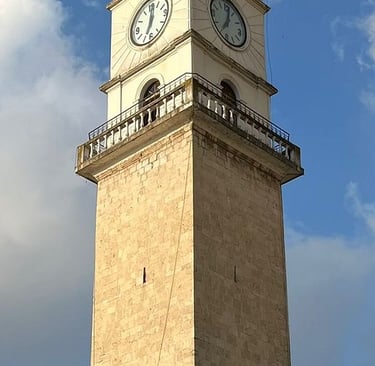
Adjectives in Albanian play an essential role in sentence construction, describing or qualifying nouns by providing information such as quality, quantity, color, size, shape, and possession. They agree in gender, number, and sometimes case with the nouns they modify. Albanian adjectives come in various forms and can appear either before or after the noun, depending on the context and meaning.
Position of Adjectives
Unlike English, where adjectives generally precede nouns, in Albanian the default position is after the noun:
djalë i mirë good boy
libër interesant interesting book
mike e dashur dear friend (female)
However, some adjectives may precede the noun, especially in poetic or emphatic contexts:
e bukura vajzë the beautiful girl
When adjectives are used attributively (as part of a noun phrase), they are often accompanied by the linking element i, e, të, or së, which agrees with the gender, number, and definiteness of the noun.
Agreement with Nouns
Adjectives in Albanian must agree with the noun in gender (masculine or feminine) and number (singular or plural). There is also a definite and indefinite form, which affects how the linking particle changes.
Indefinite singular:
djalë i gjatë a tall boy
vajzë e bukur a beautiful girl
Indefinite plural:
djem të gjatë tall boys
vajza të bukura beautiful girls
Definite singular:
djali i gjatë the tall boy
vajza e bukur the beautiful girl
Definite plural:
djemtë e gjatë the tall boys
vajzat e bukura the beautiful girls
Notice that the linking particles i, e, të, and së reflect both gender and definiteness.
Common Adjective Endings
Adjectives in Albanian come in a variety of endings, but many end in -ë, -ur, -shëm, -or, or -tar. The form of the adjective does not change by itself, but the accompanying particle (i, e, të, së) indicates its grammatical role.
Examples:
student i zgjuar smart student
grua e lumtur happy woman
djem të sjellshëm polite boys
fjalë të rëndësishme important words
Degrees of Comparison
Like in English, Albanian adjectives can express comparative and superlative degrees.
Positive:
i bukur beautiful
i shpejtë fast
Comparative:
Formed by adding më before the adjective:
më i bukur more beautiful
më i shpejtë faster
Superlative:
Formed by adding më i/e/së... më i miri, sometimes më së in fixed forms:
më i miri the best (masculine)
më e bukura the most beautiful (feminine)
më së shpejti the fastest (adverbial use)
Examples in context:
Ky është një libër më interesant. This is a more interesting book.
Ajo është vajza më e zgjuar në klasë. She is the smartest girl in class.
Adjective as Nouns
In Albanian, adjectives can also function as nouns, especially when used with the definite form. In these cases, the adjective stands in for the noun it describes.
i urti the wise one (masculine)
e bukura the beautiful one (feminine)
të varfrit the poor (plural)
These forms are common in formal or literary language.
Multiple Adjectives
When multiple adjectives describe a single noun, they typically follow the noun and are connected by dhe (and), though this can vary:
një vajzë e bukur dhe e zgjuar a beautiful and smart girl
një burrë i gjatë, i fortë dhe i dashur a tall, strong, and kind man
Each adjective is usually introduced by its own linking particle, showing agreement with the noun.
Adjective + Noun Phrases
Sometimes the adjective forms part of a more complex phrase with prepositions or modifiers:
një ditë me diell a sunny day
shtëpi pa ngjyra a colorless house
njerëz të mbushur me shpresë people filled with hope
Invariable Adjectives
Some adjectives, especially those borrowed from other languages (like French or English), may remain invariable and do not take the linking particle:
stil modern modern style
emër klasik classic name
Still, in formal writing, even these adjectives may follow Albanian grammatical rules with particles.
Expressive and Diminutive Forms
In spoken and literary Albanian, it’s common to modify adjectives to create diminutives or expressive forms, often with suffixes like -çe, -kë, -ush, or -th:
i vogël small → i vogëlush tiny / little one
i bukur beautiful → i bukurth adorably beautiful
These forms add emotional or expressive nuance and are often affectionate or poetic.
Adjectives in Albanian
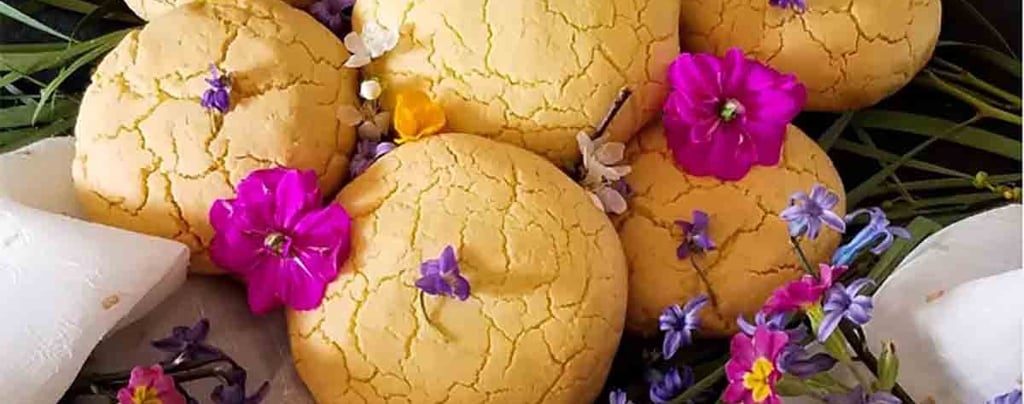
The present tense in Albanian is used to express actions that happen regularly, are happening right now, or are generally true. Like many other languages, the conjugation of verbs in Albanian depends on the subject pronoun and the verb group to which a verb belongs. Verbs in Albanian are divided into three conjugation groups based on their infinitive endings: -uar/-uarë, -oj, and other irregular patterns. Below, we will explore the key features and rules for conjugating verbs in the present tense.
Key Features of the Present Tense
Subject Pronouns: Albanian verbs are conjugated to match the subject pronoun. The subject pronouns are:
Unë (I)
Ti (You, singular informal)
Ai/Ajo (He/She)
Ne (We)
Ju (You, plural or formal)
Ata/Ato (They, masculine/feminine)
Verb Stem: To conjugate a verb, start with the verb stem. The stem is derived by removing the infinitive ending -uar/-uarë or -oj. Some irregular verbs require memorization as their stems can change.
Examples of Conjugation
1. Verbs Ending in -uar/-uarë These verbs typically drop -uar/-uarë to form the stem.
Example: punuar (to work)
Conjugation in the present tense:
Unë punoj (I work)
Ti punon (You work)
Ai/Ajo punon (He/She works)
Ne punojmë (We work)
Ju punoni (You work)
Ata/Ato punojnë (They work)
2. Verbs Ending in -oj These verbs are straightforward to conjugate. The -oj is replaced with specific endings.
Example: studioj (to study)
Conjugation in the present tense:
Unë studioj (I study)
Ti studion (You study)
Ai/Ajo studion (He/She studies)
Ne studiojmë (We study)
Ju studioni (You study)
Ata/Ato studiojnë (They study)
3. Irregular Verbs Some verbs in Albanian do not follow the regular conjugation patterns and must be memorized individually.
Example: jam (to be)
Conjugation in the present tense:
Unë jam (I am)
Ti je (You are)
Ai/Ajo është (He/She is)
Ne jemi (We are)
Ju jeni (You are)
Ata/Ato janë (They are)
Another example: kam (to have)
Conjugation in the present tense:
Unë kam (I have)
Ti ke (You have)
Ai/Ajo ka (He/She has)
Ne kemi (We have)
Ju keni (You have)
Ata/Ato kanë (They have)
Spelling Adjustments
Stem Vowel Harmony: Albanian verbs often modify their endings slightly to harmonize with the stem vowel. For instance, verbs with a stem ending in -e or -a may have endings like -më and -jnë adjusted to fit the natural flow of the word.
Pronunciation Influence: Some consonants in the stem may soften or change to ease pronunciation, especially with plural forms like -jmë and -jnë.
Usage of the Present Tense
Habitual Actions:
Unë ha mëngjes çdo ditë. (I eat breakfast every day.)
Ne shkojmë në shkollë çdo mëngjes. (We go to school every morning.)
Actions Happening Now:
Ai lexon një libër tani. (He is reading a book now.)
Ju punoni tani? (Are you working now?)
General Truths:
Dielli lind në lindje. (The sun rises in the east.)
Uji zien në 100 gradë Celsius. (Water boils at 100 degrees Celsius.)
Present Tense in Albanian
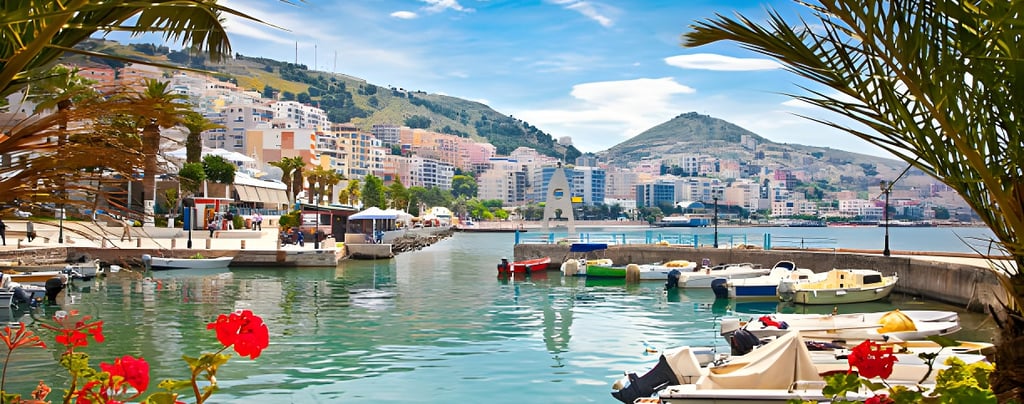
The past tense in Albanian, known as "e shkuara" or "kryera", is used to describe actions or events that happened in the past. Albanian verbs are conjugated based on person, number, and gender, and the past tense is no exception. There are different types of past tenses in Albanian, such as simple past (e shkuara e thjeshtë), imperfect (e pakryer), and past perfect (e kryer e thjeshtë). For now, we will focus on the simple past, the most commonly used form to describe completed actions.
Formation of the Past Tense in Albanian
Albanian verbs are divided into three main conjugation groups, depending on their infinitive endings: -oj, -ojt, and other irregular verbs. The simple past is formed by modifying the verb stem and adding specific endings for each grammatical person. The endings differ for singular and plural forms.
Regular Verbs in the Past Tense
Verbs ending in -oj (e.g., punoj - to work)
These verbs follow a predictable pattern in the past tense:Unë punova (I worked)
Ti punove (You worked)
Ai/Ajo punoi (He/She worked)
Ne punuam (We worked)
Ju punuat (You all worked)
Ata/Ato punuan (They worked)
Verbs ending in -ojt or -it (e.g., mësoj - to learn)
Unë mësova (I learned)
Ti mësove (You learned)
Ai/Ajo mësoi (He/She learned)
Ne mësuam (We learned)
Ju mësuat (You all learned)
Ata/Ato mësuan (They learned)
Irregular Verbs in the Past Tense
Albanian has many irregular verbs that do not follow the standard patterns. Here are a few commonly used ones:
Jam (to be)
Unë isha (I was)
Ti ishe (You were)
Ai/Ajo ishte (He/She was)
Ne ishim (We were)
Ju ishit (You all were)
Ata/Ato ishin (They were)
Kam (to have)
Unë kisha (I had)
Ti kishe (You had)
Ai/Ajo kishte (He/She had)
Ne kishim (We had)
Ju kishit (You all had)
Ata/Ato kishin (They had)
Bëj (to do/make)
Unë bëra (I did/made)
Ti bëre (You did/made)
Ai/Ajo bëri (He/She did/made)
Ne bëmë (We did/made)
Ju bëtë (You all did/made)
Ata/Ato bënë (They did/made)
Ha (to eat)
Unë hëngra (I ate)
Ti hëngre (You ate)
Ai/Ajo hëngri (He/She ate)
Ne hëngrëm (We ate)
Ju hëngrët (You all ate)
Ata/Ato hëngrën (They ate)
Gender Agreement: In the past tense, verbs do not change based on gender. The forms are consistent for both masculine and feminine subjects.
Personal Pronouns: Pronouns are often omitted in conversation since the verb endings clearly indicate the subject. For example, "Punova" is enough to indicate "I worked."
Usage of the Past Tense in Context
The past tense is versatile and can describe a variety of situations:
Completed Actions:
Dje shkova në shkollë. (Yesterday, I went to school.)
Ata luajtën futboll pasdite. (They played football in the afternoon.)
Narrative Descriptions:
Ai u ngrit, piu një kafe dhe doli. (He got up, drank a coffee, and went out.)
Historical Events:
Shqipëria fitoi pavarësinë në vitin 1912. (Albania gained independence in 1912.)
Expressing a Habit in the Past (Imperfect):
Although not the main focus of this section, the imperfect tense is used to describe habits or ongoing actions in the past:Kur isha i vogël, lexoja shumë libra. (When I was young, I used to read many books.)
Past Tense in Albanian
The future tense in Albanian is used to express actions or events that will happen after the moment of speaking. It is relatively straightforward in its structure and usage, but it requires a good understanding of how auxiliary verbs and infinitives interact.
Formation of the Future Tense
The future tense in Albanian is formed using the auxiliary verb "do" followed by the verb in its subjunctive form. The auxiliary "do" remains constant for all persons, while the conjugation of the main verb changes depending on the subject.
Structure
Do + Subjunctive Form of the Verb
Example:
"Unë do të flas" – I will speak.
"Ne do të shkojmë" – We will go.
Conjugating Regular Verbs in the Future Tense
Regular verbs in Albanian fall into three main groups based on their infinitive endings: -uar, -uar/-yer, and -uar/-irë. Here’s how they are conjugated in the future tense:
Group 1: Verbs ending in -uar
Example: "fol" (to speak)
Unë do të flas – I will speak
Ti do të flasësh – You will speak
Ai/Ajo do të flasë – He/She will speak
Ne do të flasim – We will speak
Ju do të flisni – You (plural/formal) will speak
Ata/Ato do të flasin – They will speak
Group 2: Verbs ending in -uar/-yer
Example: "lexoj" (to read)
Unë do të lexoj – I will read
Ti do të lexosh – You will read
Ai/Ajo do të lexojë – He/She will read
Ne do të lexojmë – We will read
Ju do të lexoni – You (plural/formal) will read
Ata/Ato do të lexojnë – They will read
Group 3: Verbs ending in -uar/-irë
Example: "shkruaj" (to write)
Unë do të shkruaj – I will write
Ti do të shkruash – You will write
Ai/Ajo do të shkruajë – He/She will write
Ne do të shkruajmë – We will write
Ju do të shkruani – You (plural/formal) will write
Ata/Ato do të shkruajnë – They will write
Irregular Verbs in the Future Tense
Some verbs in Albanian do not follow regular patterns and require special attention. Here are common irregular verbs in the future tense:
"Jam" (to be)
Unë do të jem – I will be
Ti do të jesh – You will be
Ai/Ajo do të jetë – He/She will be
Ne do të jemi – We will be
Ju do të jeni – You (plural/formal) will be
Ata/Ato do të jenë – They will be
"Kam" (to have)
Unë do të kem – I will have
Ti do të kesh – You will have
Ai/Ajo do të ketë – He/She will have
Ne do të kemi – We will have
Ju do të keni – You (plural/formal) will have
Ata/Ato do të kenë – They will have
Usage of the Future Tense
The future tense is used in various contexts, including:
Expressing Future Actions:
Unë do të shkoj në shkollë nesër.
I will go to school tomorrow.
Making Promises:
Ne do të ndihmojmë ty.
We will help you.
Expressing Predictions:
Moti do të jetë i mirë nesër.
The weather will be good tomorrow.
Giving Commands in the Future:
Ju do të lini këtu në orën dhjetë.
You will leave here at ten.
Future Tense with "Do" in Negative Sentences
To form the negative future tense, the word "nuk" is placed before the auxiliary verb "do".
Examples:
Unë nuk do të flas – I will not speak
Ai nuk do të vijë – He will not come
Ata nuk do të shkojnë – They will not go
Key Notes
The auxiliary "do" is always followed by the subjunctive form of the main verb.
The word "të" often appears between "do" and the verb, though it may be dropped in informal speech.
Context plays an important role in determining whether the future tense is used for predictions, promises, or plans.
Future Tense in Albanian
The imperative mood in Albanian is used to express commands, requests, suggestions, or advice. It plays a significant role in everyday conversation, as it allows speakers to directly address others and prompt specific actions. The imperative is typically used in the second person singular (informal "you") and second person plural (formal "you" or addressing multiple people), though third-person forms for indirect commands also exist in certain contexts.
Forming the Imperative
Second Person Singular
For the singular form, the imperative is usually derived from the stem of the verb. The endings may vary depending on whether the verb is in the first, second, or third conjugation group, but in many cases, no additional suffix is added.
Example 1: "To eat" (ha)
Ha! – Eat!
Example 2: "To speak" (flas)
Fli! – Speak!
Example 3: "To write" (shkruaj)
Shkruaj! – Write!
Second Person Plural
For the plural form, the imperative is typically formed by adding the suffix -ni to the verb stem.
Example 1: "To eat" (ha)
Hani! – Eat!
Example 2: "To speak" (flas)
Flisni! – Speak!
Example 3: "To write" (shkruaj)
Shkruani! – Write!
The plural form can also convey respect or formality when addressing one person in a polite or formal manner.
Negative Imperative
To create a negative command, mos is added before the verb. The structure applies to both singular and plural forms.
Example 1: "To eat" (ha)
Mos ha! – Don’t eat!
Mos hani! – Don’t eat!
Example 2: "To speak" (flas)
Mos flisni! – Don’t speak!
Mos fli! – Don’t speak!
The negative imperative conveys prohibition or strong advice not to perform the action.
Irregular Verbs in the Imperative
Some Albanian verbs are irregular and have unique forms in the imperative mood. These verbs do not follow the standard patterns and must be memorized.
Example: "To go" (shkoj)
Shko! – Go! (Singular)
Shkoni! – Go! (Plural)
Example: "To come" (vij)
Eja! – Come! (Singular)
Ejani! – Come! (Plural)
Example: "To give" (jap)
Jep! – Give! (Singular)
Jepni! – Give! (Plural)
Third-Person Imperatives
While the imperative primarily addresses the second person, indirect commands in the third person are constructed using the subjunctive mood with të.
Example: "Let him/her eat"
Të hajë!
Example: "Let them write"
Të shkruajnë!
This form is often used to express wishes or suggestions for others.
Common Uses of the Imperative
Direct Commands
Hap derën! – Open the door!
Mbyll librin! – Close the book!
Requests and Polite Suggestions
Ju lutem, flisni më ngadalë. – Please, speak more slowly.
Hani një copë! – Have a piece!
Prohibitions
Mos u shqetëso! – Don’t worry!
Mos flisni me zë të lartë! – Don’t speak loudly!
Encouragement or Advice
Mëso shqip! – Learn Albanian!
Shiko përpara! – Look ahead!
Imperatives in Albanian
The passive voice is a key aspect of Albanian grammar, used to indicate that the subject of a sentence is the recipient of an action, rather than the doer. It is widely used in formal and literary contexts, as well as in everyday conversation.
Forming the Passive Voice
In Albanian, the passive voice is typically formed in one of the following ways:
Using the verb "jam" (to be) as an auxiliary verb followed by the past participle of the main verb.
Adding specific passive endings to the active verb stem.
These methods depend on the tense and mood of the verb being conjugated.
Passive Voice with "Jam" + Past Participle
The verb "jam" (to be) is conjugated in the desired tense, followed by the past participle of the main verb. This construction is common in formal and written Albanian.
Examples:
Present Tense Passive
Unë jam thirrur. (I am called.)
Ti je thirrur. (You are called.)
Ai/Ajo është thirrur. (He/She is called.)
Ne jemi thirrur. (We are called.)
Ju jeni thirrur. (You are called.)
Ata/Ato janë thirrur. (They are called.)
Past Tense Passive
Unë isha thirrur. (I was called.)
Ti ishe thirrur. (You were called.)
Ai/Ajo ishte thirrur. (He/She was called.)
Ne ishim thirrur. (We were called.)
Ju ishit thirrur. (You were called.)
Ata/Ato ishin thirrur. (They were called.)
Future Tense Passive
Unë do të jem thirrur. (I will be called.)
Ti do të jesh thirrur. (You will be called.)
Ai/Ajo do të jetë thirrur. (He/She will be called.)
Ne do të jemi thirrur. (We will be called.)
Ju do të jeni thirrur. (You will be called.)
Ata/Ato do të jenë thirrur. (They will be called.)
Passive Voice Using Passive Endings
In some cases, Albanian verbs take on specific passive endings. These endings are added to the verb stem and vary depending on the tense, mood, and subject. Passive endings are more common in colloquial Albanian and in simpler constructions.
Present Tense Passive Endings:
The passive endings for the present tense are added directly to the stem of the verb:
-em (I)
-esh (You, singular)
-et (He/She/It)
-emi (We)
-eni (You, plural)
-en (They)
The verb shoh (to see) in the passive voice becomes:
Unë shikohem. (I am seen.)
Ti shikohesh. (You are seen.)
Ai/Ajo shikohet. (He/She is seen.)
Ne shikohemi. (We are seen.)
Ju shikoheni. (You are seen.)
Ata/Ato shikohen. (They are seen.)
Imperfect Tense Passive:
The passive endings in the imperfect tense are:
-esha (I)
-eshe (You, singular)
-ej (He/She/It)
-eshim (We)
-eshit (You, plural)
-eshin (They)
Examples with the verb shkruaj (to write):
Unë shkruhesha. (I was being written.)
Ti shkruhesh. (You were being written.)
Ai/Ajo shkruhej. (He/She was being written.)
Ne shkruheshim. (We were being written.)
Ju shkruheshit. (You were being written.)
Ata/Ato shkruheshin. (They were being written.)
Key Notes on the Past Participle
Agreement: The past participle in passive constructions does not change based on the subject, unlike in some other languages.
Formation: The past participle often ends in -ur for regular verbs, such as thirrur (called), shkruar (written), or bërë (done).
Passive in Reflexive Verbs
Reflexive verbs in Albanian sometimes take on passive meanings, depending on the context. For example:
Dera hapet. (The door is opening / The door is opened.)
Using Passive Voice in Albanian
The passive voice in Albanian is used to:
Shift focus from the agent (the doer) to the recipient of the action.
Libri është lexuar. (The book has been read.)
Emphasize the action itself.
Kjo çështje do të trajtohet. (This matter will be addressed.)
Create a formal or neutral tone in writing and speech.
Vendimi u mor nga komisioni. (The decision was made by the committee.)
Passive in Albanian
Negation in Albanian plays a vital role in sentence construction, enabling speakers to express denial, contradiction, or refusal. Like in many languages, Albanian uses specific words and structures to create negative sentences, and these vary depending on the tense, mood, and context.
Negative Words in Albanian
"Jo": The most basic negation word, used as "no" or "not."
Example: A je i lodhur? Jo! (Are you tired? No!)
"Nuk": The most common negation particle, placed before verbs to negate actions.
Example: Unë nuk shkoj. (I do not go.)
"S’": A shortened form of "nuk," often used in informal contexts or for stylistic reasons.
Example: S’dua të flas. (I don’t want to speak.)
Negation in the Present Tense
To negate a sentence in the present tense, "nuk" or "s’" is placed before the verb. The verb conjugation itself remains unchanged.
Positive: Unë flas shqip. (I speak Albanian.)
Negative: Unë nuk flas shqip. (I do not speak Albanian.)
For habitual actions or general truths, the structure remains the same:
Positive: Ata shkojnë në shkollë çdo ditë. (They go to school every day.)
Negative: Ata nuk shkojnë në shkollë çdo ditë. (They do not go to school every day.)
Negation in the Past Tense
In the past tense, negation is also formed by placing "nuk" or "s’" before the auxiliary or main verb.
Positive: Unë shkova në shtëpi. (I went home.)
Negative: Unë nuk shkova në shtëpi. (I did not go home.)
For past perfect and pluperfect constructions:
Positive: Ata kishin lexuar librin. (They had read the book.)
Negative: Ata nuk kishin lexuar librin. (They had not read the book.)
Negation in the Future Tense
Future tense negation follows the same pattern, with "nuk" or "s’" placed before the auxiliary verb "do."
Positive: Unë do të punoj nesër. (I will work tomorrow.)
Negative: Unë nuk do të punoj nesër. (I will not work tomorrow.)
Negation in the Imperative Mood
When forming negative commands or requests, the word "mos" is used instead of "nuk."
Positive: Fli tani! (Sleep now!)
Negative: Mos fli tani! (Do not sleep now!)
"Mos" negates all imperative forms, both singular and plural.
Example: Mos bëni zhurmë! (Do not make noise!)
Negation with Infinitives and Subjunctive Mood
In constructions with infinitives or subjunctive verbs, "mos" is used to indicate negation.
Positive: Dua të dal. (I want to go out.)
Negative: Nuk dua të dal. (I do not want to go out.)
Subjunctive with negation: Shpresoj që të mos vijë vonë. (I hope that he/she does not come late.)
Double Negation
In Albanian, double negation is common and grammatically correct. This often occurs with negative pronouns or adverbs like "asnjë" (no one), "asgjë" (nothing), and "askush" (nobody).
Example 1: Nuk kam asgjë për të thënë. (I have nothing to say.)
Example 2: Askush nuk erdhi. (Nobody came.)
Double negation strengthens the negative meaning, and its use is required when negative words are involved.
Negative Words and Expressions
Albanian uses a variety of negative words to express different nuances of negation:
Asnjë: no one / none
Example: Nuk pashë asnjë njeri. (I did not see anyone.)
Askund: nowhere
Example: Nuk e gjeta askund. (I did not find it anywhere.)
Asnjëherë: never
Example: Nuk kam qenë asnjëherë në Itali. (I have never been to Italy.)
Asgjë: nothing
Example: Nuk dua asgjë. (I do not want anything.)
Negation in Questions
Negation can also appear in questions, often to imply doubt or challenge.
Example: A nuk është kjo e vërtetë? (Is this not true?)
Example: Pse nuk vjen sot? (Why are you not coming today?)
Important Notes on Negation in Albanian
"Nuk" vs. "S’": While interchangeable, "s’" is more informal and often used in spoken Albanian.
Position: The negative particle always precedes the verb, regardless of the tense or mood.
Double Negation Rule: Always use "nuk" or "s’" along with other negative words (e.g., nuk askund or nuk asgjë).
Negation in Albanian
Albanian is classified as having a Subject-Verb-Object (SVO) word order in its most neutral form, it allows for variations depending on context, emphasis, and stylistic choices.
Basic Word Order: Subject-Verb-Object (SVO)
In its simplest form, an Albanian sentence follows the SVO structure:
Subjekti (Subject): The doer of the action.
Fjali (Verb): The action being performed.
Kallëzuesi (Object): The receiver of the action.
For example:
Unë lexoj librin.
(I read the book.)
Here, Unë (I) is the subject, lexoj (read) is the verb, and librin (the book) is the object.
Flexible Word Order for Emphasis
Albanian allows flexibility in word order to emphasize different parts of the sentence. This flexibility is especially common in spoken language and poetry.
Object-Verb-Subject (OVS):
Librin lexoj unë.
(It’s the book I’m reading.)This construction emphasizes the object, librin (the book).
Verb-Subject-Object (VSO):
Lexoj unë librin.
(I am reading the book.)This can be used to focus on the action, lexoj (reading).
Object-Subject-Verb (OSV):
Librin unë lexoj.
(The book is being read by me.)This emphasizes the object first and gives a stylistic or poetic touch.
Position of Adjectives
Adjectives in Albanian typically follow the noun they modify, unlike in English.
Një libër i mirë.
(A good book.)
Here, i mirë (good) comes after libër (book). However, for stylistic emphasis or poetic effect, the adjective can precede the noun:
I mirë një libër. (Good, a book.)
This is less common in everyday language.
Placement of Negations
In Albanian, negations are placed directly before the verb to negate the action.
Unë nuk lexoj librin.
(I do not read the book.)
If the sentence structure changes for emphasis, the negation stays with the verb:
Librin nuk e lexoj unë.
(The book is not read by me.)
Questions and Word Order
In Albanian, word order changes slightly when forming questions. Typically, the verb moves to the front of the sentence, similar to English.
A lexon ti librin?
(Do you read the book?)
Without the particle a, you can also use a rising intonation to form a question:
Lexon ti librin? (You read the book?)
When asking about an object or subject, the interrogative word usually comes first:
Kush lexon librin?
(Who reads the book?)Çfarë lexon ti?
(What are you reading?)
Word Order in Commands
In imperative sentences, the verb comes first, directly addressing the subject:
Lexo librin!
(Read the book!)
If additional information or emphasis is added, the structure can shift slightly:
Lexo ti librin menjëherë!
(You read the book immediately!)
Clitics and Word Order
Clitics (short words like pronouns) in Albanian often attach to the verb, creating a specific word order.
Unë e lexoj librin.
(I read it, the book.)
Here, e (it) is a clitic pronoun that refers to librin (the book). Clitics can also appear in different positions depending on the sentence structure:
E lexoj librin unë. (It’s the book I’m reading.)
Librin unë e lexoj. (The book is read by me.)
Prepositional Phrases and Word Order
Prepositional phrases in Albanian usually follow the verb and object.
Unë lexoj librin në bibliotekë.
(I read the book in the library.)
If emphasizing the location, the prepositional phrase can move to the front:
Në bibliotekë lexoj unë librin.
(In the library, I am reading the book.)
Word Order in Subordinate Clauses
In subordinate clauses, the word order typically stays as SVO, but conjunctions like që (that) or kur (when) introduce the clause.
Unë di që ti lexon librin.
(I know that you are reading the book.)
For emphasis, other elements can shift:
Që librin ti lexon, unë e di.
(That the book is being read by you, I know.)
Word Order in Albanian
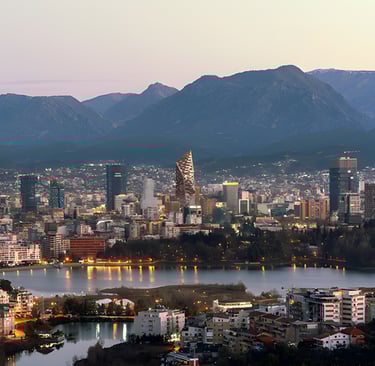
In Albanian, forming questions is an essential part of communication and follows a logical yet distinctive set of rules. Whether you’re asking a simple yes/no question, seeking specific information, or constructing more complex interrogative sentences, understanding the structure and grammar of Albanian questions will help you communicate effectively.
Yes/No Questions
Yes/no questions in Albanian are often formed by maintaining the same word order as a declarative sentence but changing the intonation. Typically, there is no need for auxiliary verbs like in English (e.g., "Do you...?"). The rising intonation at the end of the sentence signals that it is a question.
For example:
Declarative: Ti flet shqip. (You speak Albanian.)
Interrogative: Ti flet shqip? (Do you speak Albanian?)
Alternatively, you can use the particle "a" at the beginning of the sentence to make it explicitly a question:
A flet shqip? (Do you speak Albanian?)
The particle "a" is neutral and doesn’t change the meaning of the question but emphasizes that it is interrogative.
Wh-Questions
To ask for specific information, Albanian uses a set of interrogative words, similar to the "wh-" words in English. These words typically appear at the beginning of the sentence:
Kush (Who)
Çfarë or Ç’ (What)
Kujt (Whom)
Kur (When)
Ku (Where)
Si (How)
Pse (Why)
Sa (How much/How many)
Cili/Cila (Which - masculine/feminine)
Examples:
Kush erdhi? (Who came?)
Çfarë dëshiron? (What do you want?)
Ku shkon? (Where are you going?)
Si je? (How are you?)
Pse vonohesh? (Why are you late?)
Sa kushton? (How much does it cost?)
Cila është shtëpia jote? (Which one is your house?)
In some cases, the interrogative word can appear in the middle of a sentence, especially in informal speech:
Ti e di se kush erdhi? (Do you know who came?)
Using Prepositions in Questions
In Albanian, prepositions often appear at the beginning of the sentence when combined with interrogative words:
Për kë po flet? (Who are you talking about?)
Me cilin shkon? (With whom are you going?)
Nga kush e more? (From whom did you get it?)
The preposition must agree with the case of the noun or pronoun it refers to. For instance:
Kujt i takon? (To whom does it belong?) Here, "kuj" changes to "kujt" in the dative case.
Questions with "Po"
The particle "po" is used in Albanian to create a conversational and dynamic context in questions. It can be translated as "what about" or "and":
Po ti? (And you?)
Po motra jote? (What about your sister?)
This construction is especially common in informal or follow-up questions during a conversation.
Tag Questions
Albanian uses simple phrases for tag questions, often relying on "apo jo" (or not) or "a është e vërtetë" (is it true) at the end of a statement to confirm something:
Ti flet shqip, apo jo? (You speak Albanian, don’t you?)
Është e vështirë, a është e vërtetë? (It’s difficult, isn’t it?)
Indirect Questions
Indirect questions in Albanian are embedded in a sentence and often introduced by verbs like "di" (to know), "pyes" (to ask), or "mendoj" (to think):
Nuk e di kush e bëri. (I don’t know who did it.)
Pyeta se kur do të vijë. (I asked when he/she will come.)
Ai po mendon se pse ndodhi. (He is thinking about why it happened.)
Notice that the interrogative word remains in the same position, but the intonation changes to suit the declarative sentence.
Expressing Politeness in Questions
To make questions more polite in Albanian, use expressions like "mund" (can) or "a ka mundësi" (is it possible):
Mund të më ndihmoni? (Can you help me?)
A ka mundësi të flasim? (Is it possible to talk?)
These forms are commonly used in formal situations or when addressing someone with respect.
Questions in Albanian
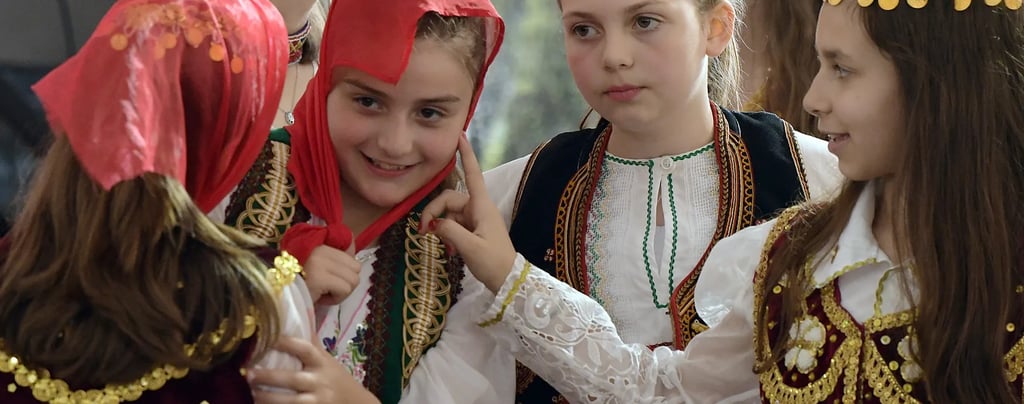
Relative clauses are an essential part of the Albanian language, used to provide additional information about a noun or pronoun in a sentence. They function similarly to relative clauses in English but have their unique grammatical structure and rules.
Relative Pronouns in Albanian
In Albanian, relative clauses are introduced by specific relative pronouns. The most commonly used relative pronouns are:
që – translates to "that," "which," or "who."
i cili / e cila / të cilët / të cilat – translates to "which" or "who," and agrees in gender and number with the noun it refers to. These forms are used for emphasis or formal contexts.
Examples:
Njeriu që punon shumë do të ketë sukses.
(The person who works hard will succeed.)Libri i cili është në tryezë është shumë interesant.
(The book which is on the table is very interesting.)
Structure of Relative Clauses
Relative clauses in Albanian generally follow the noun they describe. The relative pronoun serves as a link between the main clause and the relative clause, replacing the noun in the relative clause.
Examples:
Vajza që shikon filmin është motra ime.
(The girl who is watching the movie is my sister.)Shtëpia e cila është ndërtuar vitin e kaluar është e bukur.
(The house which was built last year is beautiful.)
Agreement in Gender and Number
The relative pronouns i cili, e cila, të cilët, të cilat must agree in gender and number with the noun they refer to. This adds precision to the sentence and is often used in formal or literary contexts.
i cili – masculine singular
e cila – feminine singular
të cilët – masculine plural
të cilat – feminine plural
Examples:
Njeriu i cili po vjen është miku im.
(The man who is coming is my friend.)Vajzat të cilat janë në dhomë janë të lodhura.
(The girls who are in the room are tired.)
Prepositions and Relative Clauses
When a preposition is involved, it is placed before the relative pronoun or at the beginning of the relative clause. Unlike English, where prepositions often appear at the end, Albanian maintains a more structured placement.
Examples:
Djaloshi me të cilin po flisja është shoku im.
(The boy with whom I was speaking is my friend.)Kafshët për të cilat kujdesemi janë të shëndetshme.
(The animals for which we care are healthy.)
Omitting the Relative Pronoun
In informal Albanian, particularly in spoken language, the relative pronoun që is sometimes omitted when the meaning of the sentence remains clear. However, this is less common in formal contexts.
Examples:
Libri (që) po lexoj është interesant.
(The book I am reading is interesting.)Miku (që) takova dje është shumë i sjellshëm.
(The friend I met yesterday is very polite.)
Relative Clauses for Possession
To express possession in a relative clause, Albanian uses a structure involving the preposition i/e/të combined with the pronoun cili/cila to agree with the possessed object.
Examples:
Fëmija i cili ka humbur librin është duke qarë.
(The child whose book is lost is crying.)Gruaja e cila e humbi çantën është shumë e shqetësuar.
(The woman whose bag was lost is very worried.)
Relative Clauses with Tense
The verb in the relative clause can take any tense, depending on the time of the action relative to the main clause. This flexibility allows for precise expressions of timing.
Examples:
Vajza që po fliste më parë është motra ime.
(The girl who was speaking earlier is my sister.)Njerëzit të cilët do të vijnë nesër janë miqtë tanë.
(The people who will come tomorrow are our friends.)
Relative Clauses in Albanian
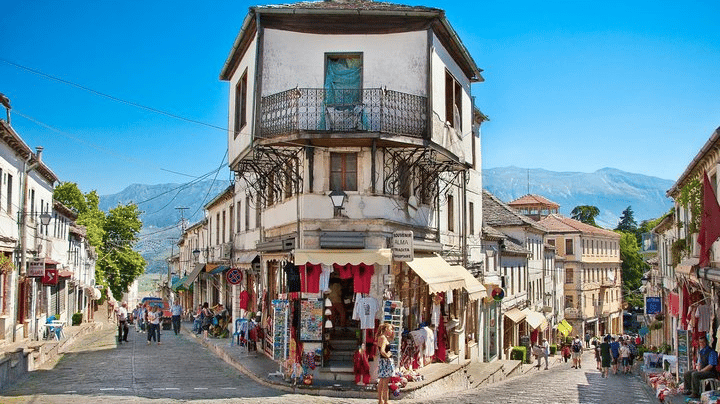
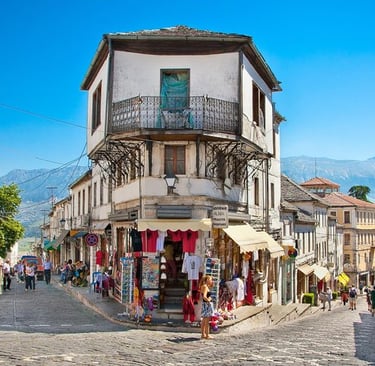
EXPAND YOUR KNOWLEDGE
If you are serious about learning Albanian, we recommend that you download the Complete Albanian Master Course.
You will receive all the information available on the website in a convenient portable digital format as well as additional contents: over 15.000 Vocabulary Words and Useful Phrases, in-depth explanations and exercises for all Grammar Rules, exclusive articles with Cultural Insights that you won't find in any other textbook so you can amaze your Albanian friends or business partners thanks to your knowledge of their country and history.
With a one-time purchase you will also get hours of Podcasts to Practice your Albanian listening skills as well as Dialogues with Exercises to achieve your own Master Certificate.
Start speaking Albanian today!
For requests or suggestions: pr@learnalbanian.org

Go Your Own Way
© 2026 All rights reserved
Learn the official language of Albania and Kosovo in 30 days thanks to our complete Grammar, Vocabulary and Culture courses. Start speaking Albanian today!