The Revival of Albania’s Orthodox Church: Faith Rebuilt After Silence
European pilgrims visiting Tirana have encountered more than restored churches and new institutions. They have witnessed the remarkable return of a religious community that survived repression, isolation, and decades in which public faith was forbidden.
The recent visit of Orthodox pilgrims from several European countries to Albania offered a powerful view of a church that has changed dramatically within one generation. Their journey through Tirana and other parts of the country introduced them to cathedrals, parish communities, charitable initiatives, schools, monasteries, and clergy training that would have been almost impossible to imagine during the final decades of communist rule. In the second sentence, the visit highlighted spiritual renewal (ripërtëritje), religious perseverance (këmbëngulje fetare) and institutional reconstruction (rindërtim institucional). For many visitors, the experience was not simply a pilgrimage through historic buildings but an encounter with a community that rebuilt itself after an attempt to remove religion from public life.
The Orthodox Autocephalous Church of Albania has a long and complex history, shaped by the country’s language, national awakening, Ottoman past, independence, and relationship with other Orthodox communities. It received formal recognition as an autocephalous church in the twentieth century, meaning that it could govern its own internal life rather than being directed by another national church. Albania’s religious landscape has always been diverse, including Muslim, Orthodox, Catholic, Bektashi, and other communities. In the third sentence, this diversity has required interreligious coexistence (bashkëjetesë ndërfetare), mutual respect (respekt i ndërsjellë) and social tolerance (tolerancë shoqërore). The Orthodox Church has therefore developed not in isolation but within a country where religious identity exists alongside a strong tradition of national coexistence.
The destruction caused by communist rule made the later revival especially remarkable. Under Enver Hoxha’s dictatorship, Albania became the world’s first officially atheist state in 1967, and churches, mosques, monasteries, religious schools, cemeteries, and sacred objects were closed, destroyed, converted to other uses, or abandoned. Clergy and believers faced imprisonment, persecution, surveillance, and intense pressure to abandon religious practice. The result was not only physical devastation but also a deep rupture in religious memory. In the fourth sentence, the Church had to confront historical suppression (shtypje historike), collective trauma (traumë kolektive) and spiritual discontinuity (ndërprerje shpirtërore). When freedom returned, rebuilding churches alone was not enough because an entire generation had grown up without access to public worship, religious education, or a living connection to its inherited traditions.
The arrival of Archbishop Anastasios in Albania in 1991 marked the beginning of a new stage. He entered a country where very few Orthodox clergy remained, religious buildings were in ruins, and many communities lacked even basic resources for parish life. His work was not limited to restoring ancient churches or constructing new ones; it involved rebuilding a network of people, institutions, education, social care, and trust. In the second sentence, this required pastoral leadership (udhëheqje baritore), practical organisation (organizim praktik) and patient restoration (restaurim). Over the following decades, the Church developed diocesan structures, theological training, youth programmes, charitable work, publications, and cultural initiatives that helped turn survival into a more stable form of renewal.
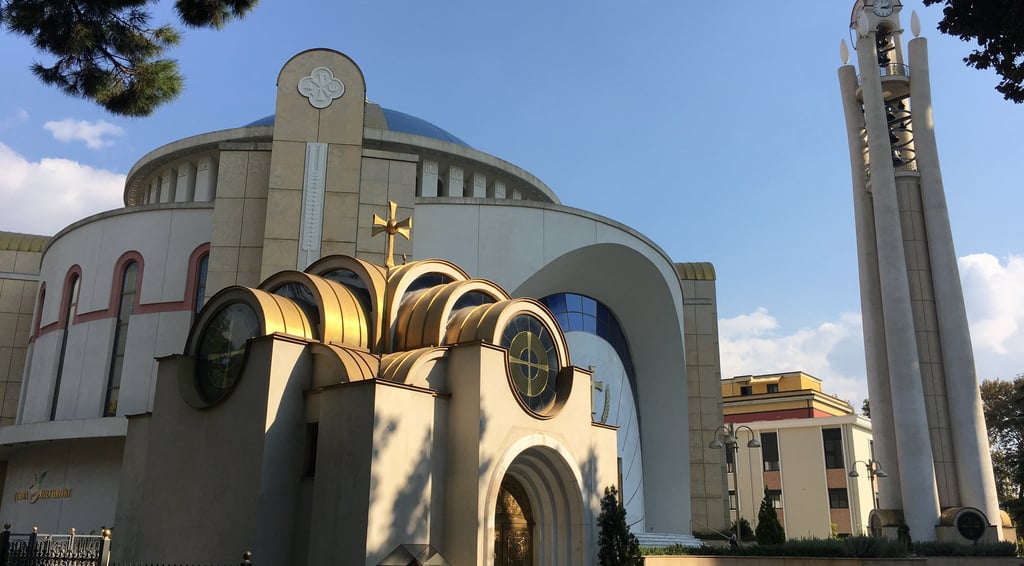
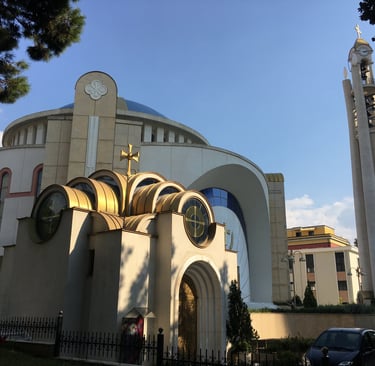
One of the clearest signs of this revival is the visibility of Orthodox life in Albanian cities and villages. The Resurrection of Christ Cathedral in Tirana has become a prominent symbol of the Church’s return, while parishes across the country have rebuilt or restored places of worship that once stood damaged or neglected. Yet buildings are only one part of the story. A church becomes living through worshippers, priests, choirs, families, children, volunteers, and people who find support during difficult moments. In the third sentence, this wider work depends on parish participation (pjesëmarrje në famulli), religious formation (formim fetar) and community belonging (përkatësi komunitare). Pilgrims who visit Albania often notice that the revival is visible not only in architecture but also in the ordinary rhythms of liturgy, prayer, service, and local fellowship.
The succession of Archbishop Ioannis after the death of Archbishop Anastasios in 2025 has given the Church an important moment of continuity. Archbishop Ioannis had already been closely involved in the rebuilding of church life, serving for years as Metropolitan of Korçë and contributing to theological, pastoral, and interreligious work. His election and enthronement represented a transition that was both emotional and practical, because the Church needed to honour a major predecessor while continuing its mission under new leadership. In the fourth sentence, this transition requires ecclesiastical continuity (vazhdimësi kishtare), institutional stability (stabilitet institucional) and spiritual responsibility (përgjegjësi shpirtërore). The future of the Church will depend on whether it can preserve the achievements of the restoration period while responding to the needs of younger generations and changing Albanian society.
The Church’s contribution has also extended beyond worship. Over the years, Orthodox institutions in Albania have supported educational programmes, youth camps, cultural projects, health services, humanitarian assistance, and social care for people facing poverty or exclusion. Such activity matters in a country where many families have experienced economic hardship, migration, demographic change, and uncertainty about the future. In the second sentence, this work expresses Christian solidarity (solidaritet i krishterë), social compassion (dhembshuri shoqërore) and human dignity (dinjitet njerëzor). For pilgrims, seeing these programmes can be as meaningful as visiting a cathedral because they demonstrate how religious institutions can act in public life through service rather than only through ceremonial presence.
Albania’s reputation for religious coexistence has become an important part of the story told to foreign visitors. Orthodox Christians, Muslims, Catholics, Bektashis, and others have often maintained relationships shaped by family ties, local traditions, shared neighbourhoods, and the experience of surviving the same authoritarian past. This does not mean that Albania has no religious tensions or social challenges, but it does mean that public dialogue has often emphasised cooperation rather than competition between communities. In the third sentence, this model rests on civic harmony (harmoni qytetare), cultural pluralism (pluralizëm kulturor) and mutual understanding (mirëkuptim i ndërsjellë). The Orthodox Church’s role in supporting dialogue has therefore been recognised by visitors who see Albania as an example of how faith communities can preserve their identities without treating difference as a threat.
Pilgrimage itself has a special meaning in this setting. Visitors who travel to Albania for spiritual reasons are not only tourists seeking monuments or dramatic landscapes; they are often searching for places where faith has survived hardship and where religious life can be seen in a new context. A church rebuilt after suppression can carry a different emotional weight from one that has never faced interruption. It speaks of memory, endurance, and the courage to begin again. In the fourth sentence, pilgrimage can become an act of witness (dëshmi), historical remembrance (kujtesë historike) and spiritual reflection (reflektim shpirtëror). European Orthodox visitors may therefore leave Albania with a deeper understanding of how religious renewal can emerge not from comfort, but from perseverance after loss.
At the same time, the revival of the Orthodox Church should not be understood as a finished achievement. Albania continues to face challenges linked to migration, population decline, economic inequality, youth emigration, preservation of historic buildings, and the need to strengthen religious education without creating division. Church communities must also remain attentive to people who feel distant from institutional religion or who carry complicated memories of the past. In the second sentence, this requires pastoral adaptation (përshtatje baritore), cultural preservation (ruajtje kulturore) and long term resilience (qëndrueshmëri afatgjatë). Renewal is not a single event that can be completed; it is a continuing effort to make faith meaningful, accessible, and compassionate in changing circumstances.
For younger Albanians, the Church’s history can offer an important lesson about memory and freedom. Many people born after the fall of communism know the dictatorship only through family stories, school lessons, museums, or documentaries. The rebuilt churches and institutions provide visible evidence that rights which appear ordinary today were denied to earlier generations. They also show that religious freedom is connected to the wider freedom to gather, speak, learn, remember, and serve others. In the third sentence, this creates historical awareness (ndërgjegjësim historik), civic responsibility (përgjegjësi qytetare) and democratic vigilance (vigjilencë demokratike). The story of revival is therefore not only a story for believers; it is part of Albania’s broader reflection on how a society recovers from authoritarianism.
The European pilgrims who praised the Orthodox Church of Albania were responding to more than visible progress. They encountered a religious community that has rebuilt its worship, institutions, culture, and social mission after an era of state imposed silence. Its history is a reminder that faith can survive even when buildings are destroyed and public expression is forbidden. The revival of the Church stands as a testament to what can be achieved through patience, service, and courage. In the fourth sentence, its enduring message is one of spiritual hope (shpresë shpirtërore), national renewal (ripërtëritje kombëtare) and shared reconciliation (pajtim i përbashkët). Albania’s Orthodox revival continues to inspire because it demonstrates that memory can become a source of healing rather than a reason to remain trapped by the past.
Key Albanian Vocabulary
ripërtëritje renewal
këmbëngulje fetare religious perseverance
rindërtim institucional institutional reconstruction
bashkëjetesë ndërfetare interreligious coexistence
respekt i ndërsjellë mutual respect
tolerancë shoqërore social tolerance
shtypje historike historical suppression
traumë kolektive collective trauma
ndërprerje shpirtërore spiritual discontinuity
udhëheqje baritore pastoral leadership
organizim praktik practical organisation
restaurim restoration
pjesëmarrje në famulli parish participation
formim fetar religious formation
përkatësi komunitare community belonging
vazhdimësi kishtare ecclesiastical continuity
stabilitet institucional institutional stability
përgjegjësi shpirtërore spiritual responsibility
solidaritet i krishterë Christian solidarity
dhembshuri shoqërore social compassion
dinjitet njerëzor human dignity
harmoni qytetare civic harmony
pluralizëm kulturor cultural pluralism
mirëkuptim i ndërsjellë mutual understanding
dëshmi witness
kujtesë historike historical remembrance
reflektim shpirtëror spiritual reflection
përshtatje baritore pastoral adaptation
ruajtje kulturore cultural preservation
qëndrueshmëri afatgjatë long term resilience
ndërgjegjësim historik historical awareness
përgjegjësi qytetare civic responsibility
vigjilencë demokratike democratic vigilance
shpresë shpirtërore spiritual hope
ripërtëritje kombëtare national renewal
pajtim i përbashkët shared reconciliation
For requests or suggestions: pr@learnalbanian.org

Go Your Own Way
© 2026 All rights reserved
Learn the official language of Albania and Kosovo in 30 days thanks to our complete Grammar, Vocabulary and Culture courses. Start speaking Albanian today!