Lybeniq Remembered: Twenty-Eight Years of Grief, Memory and the Search for Justice
The annual commemoration of the Lybeniq massacre honours civilians killed during the Kosovo war while reminding the public that remembrance without accountability leaves survivors and families carrying an unfinished burden.
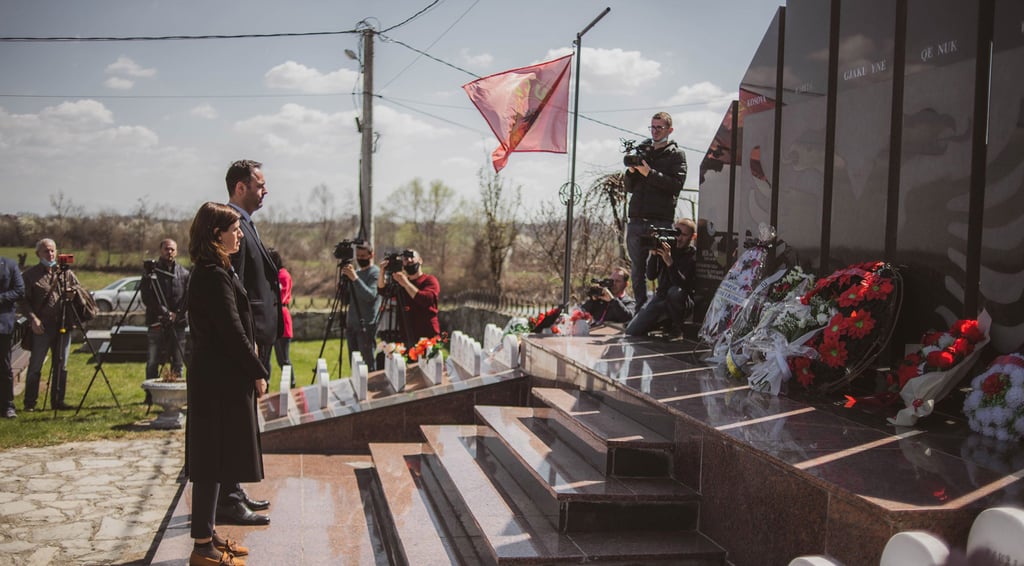
Kosovo marked the twenty-eighth anniversary of the Lybeniq massacre in May 2026, honouring civilians from the village near Peja who were killed during the war of 1998 and 1999. The ceremony was more than a local gathering beside graves and memorial stones. It was an act of commemoration (përkujtim), collective remembrance (kujtesë) and public accountability (llogaridhënie). For families of the victims, the anniversary is not only a date on a calendar but a return to the absence left by parents, children, siblings, neighbours, and friends whose lives were destroyed by violence.
Lybeniq became one of many Kosovo villages scarred by attacks during the conflict between Serbian and Yugoslav forces and the Kosovo Liberation Army. Accounts of the violence describe killings carried out at different moments, including attacks in May 1998 and in April 1999, when the wider war reached an especially brutal stage. The village’s history is inseparable from civilian suffering (vuajtje), wartime atrocity (mizori) and forced displacement (zhvendosje). Families were separated, homes were emptied, and ordinary routines of farming, schooling, worship, and family life were replaced by fear and uncertainty.
The events in Lybeniq must be understood within the broader history of the Kosovo war, which escalated after years of political repression, discrimination, and growing armed confrontation. During the spring of 1999, widespread campaigns of expulsion, murder, abuse, and property destruction affected Kosovo Albanian civilians in many municipalities. The historical chronology (kronologji), military escalation (përshkallëzim) and humanitarian catastrophe (katastrofë) show why individual village massacres cannot be treated as isolated episodes. They formed part of a wider landscape in which civilians were repeatedly exposed to violence because of where they lived and who they were.
For Lybeniq, the importance of commemoration lies partly in restoring the human scale of a history often discussed through statistics. Numbers can convey the magnitude of a crime, but they cannot explain the loss of a child’s voice in a home, the silence left at a family table, or the lifelong grief of a survivor. Every victim had a name, relationships, memories, and a place in the village. Their stories require testimony (dëshmi), careful documentation (dokumentim) and historical recognition (njohje). Without this work, violence can be reduced to an abstraction rather than understood as a crime committed against individual human beings.
The passage of nearly three decades has made the demand for justice more difficult, but it has not made it less necessary. Witnesses grow older, memories become harder to preserve, evidence can disappear, and political priorities can shift away from the needs of survivors. This creates the risk of impunity (mosndëshkim), delayed prosecution (ndjekje penale) and incomplete justice (drejtësi). Families of the dead and disappeared often live with the painful knowledge that commemoration may continue every year while those responsible remain unidentified, uncharged, or beyond the reach of a court.
War-crimes investigations are difficult because they require more than public knowledge that a massacre occurred. Prosecutors must establish who gave orders, who carried out particular acts, which units were present, what evidence can be verified, and how responsibility moved through a chain of command. This involves judicial jurisdiction (juridiksion), evidential verification (verifikim) and forensic identification (identifikim). Such work is often slow and emotionally exhausting for families, but it is essential because justice depends on proof that can survive legal challenge rather than on memory alone.
Survivors and relatives carry a particular burden in this process. They are often asked to repeat traumatic experiences before investigators, journalists, researchers, courts, and public audiences. Some have spent years searching for the remains of loved ones, seeking official records, or waiting for information that may never arrive. Their experiences involve personal trauma (traumë), human dignity (dinjitet) and the right to truth (e vërteta). A meaningful justice process should not treat them merely as sources of evidence but as people entitled to respect, support, and a role in deciding how their stories are preserved.
The search for missing persons remains closely connected to the legacy of Lybeniq and many other villages across Kosovo. Identifying remains, locating burial sites, reviewing archives, and comparing forensic records are not only technical tasks. They are steps toward allowing families to bury relatives with dignity and to establish a reliable historical record. This requires access to archives (arkiva), forensic expertise (ekspertizë) and institutional cooperation (bashkëpunim). When these processes are delayed, families remain trapped between hope and grief, unable to receive the certainty that mourning often requires.
Annual memorial events are therefore not simply symbolic. They create a public space where relatives, villagers, officials, students, and visitors can acknowledge the past together. Flowers, speeches, prayer, silence, and the reading of names all help resist the disappearance of memory. Such acts support memorialisation (përkujtësim), community resilience (qëndrueshmëri) and intergenerational memory (kujtesë ndërbreznore). They also remind younger people that the rights and freedoms they experience today were shaped by the suffering and resistance of people who lived through war.
Education has an important role in ensuring that remembrance becomes more than ceremony. Young Kosovars need access to carefully researched history that explains the conflict without reducing it to slogans, revenge, or selective memory. They should learn how evidence is collected, how international law addresses war crimes, and why civilians must be protected during conflict. This encourages historical literacy (shkrim-lexim historik), ethical reflection (reflektim) and civic empathy (ndjeshmëri). Education cannot erase pain, but it can help future generations understand why denial, hatred, and dehumanisation carry such serious consequences.
Remembering Lybeniq also requires rejecting the idea that one community’s suffering makes another community’s suffering irrelevant. The Kosovo war harmed many people, while the vast majority of abuses documented by international bodies were committed against Kosovo Albanian civilians by forces under Serbian and Yugoslav control. Honest remembrance must recognise established facts while protecting the principle that every civilian life has value. This requires historical integrity (integritet), moral responsibility (përgjegjësi) and a commitment to non-recurrence (mos-përsëritje). A society that confronts the past truthfully is better able to recognise warning signs before violence becomes normalised again.
The continued absence of full accountability can create frustration, especially when families see public ceremonies repeated but legal outcomes remain limited. Memorials can provide recognition, but they cannot substitute for investigations, indictments, trials, and decisions based on evidence. The gap between memory and justice becomes a source of public disillusionment (zhgënjim), institutional mistrust (mosbesim) and political frustration (frustrim). For this reason, governments and judicial institutions must treat war-crimes cases as an ongoing responsibility rather than a historical issue that can be quietly closed with time.
At the same time, remembrance can sustain hope. Survivors who share their stories, historians who preserve records, lawyers who pursue cases, and local communities who maintain memorial sites all resist the erasure of the past. Their work creates solidarity (solidaritet), moral courage (guxim) and democratic vigilance (vigjilencë). These values matter because justice is rarely achieved by one institution acting alone. It requires families, civil society, courts, researchers, journalists, and public officials to keep insisting that crimes against civilians must be named, documented, and answered.
Twenty-eight years after the first killings remembered in Lybeniq, the village remains a place of mourning but also of determination. Its annual commemoration asks Kosovo and the wider region to remember that peace is not secured merely by the end of armed conflict. Peace requires truth, lawful accountability, and recognition of every life lost. The legacy of Lybeniq should therefore strengthen reconciliation (pajtim), civic conscience (ndërgjegje) and lasting hope (shpresë). Remembering the victims means refusing to allow their stories to disappear and continuing the work of justice until memory is joined by meaningful responsibility.
Key Albanian Vocabulary
përkujtim commemoration
kujtesë remembrance
llogaridhënie accountability
vuajtje suffering
mizori atrocity
zhvendosje displacement
kronologji chronology
përshkallëzim escalation
katastrofë catastrophe
dëshmi testimony
dokumentim documentation
njohje recognition
mosndëshkim impunity
ndjekje penale prosecution
drejtësi justice
juridiksion jurisdiction
verifikim verification
identifikim identification
traumë trauma
dinjitet dignity
e vërteta truth
arkiva archives
ekspertizë expertise
bashkëpunim cooperation
përkujtësim memorialisation
qëndrueshmëri resilience
kujtesë ndërbreznore intergenerational memory
shkrim-lexim historik historical literacy
reflektim reflection
ndjeshmëri empathy
integritet integrity
përgjegjësi responsibility
mos-përsëritje non-recurrence
zhgënjim disillusionment
mosbesim mistrust
frustrim frustration
solidaritet solidarity
guxim courage
vigjilencë vigilance
pajtim reconciliation
ndërgjegje conscience
shpresë hope
For requests or suggestions: pr@learnalbanian.org

Go Your Own Way
© 2026 All rights reserved
Learn the official language of Albania and Kosovo in 30 days thanks to our complete Grammar, Vocabulary and Culture courses. Start speaking Albanian today!