Kosovo’s Election Cycle Deepens a Crisis of Confidence
Repeated elections have kept Kosovo’s democracy active, but they have not yet restored public faith that political institutions can govern effectively, cooperate responsibly, and deliver meaningful change.
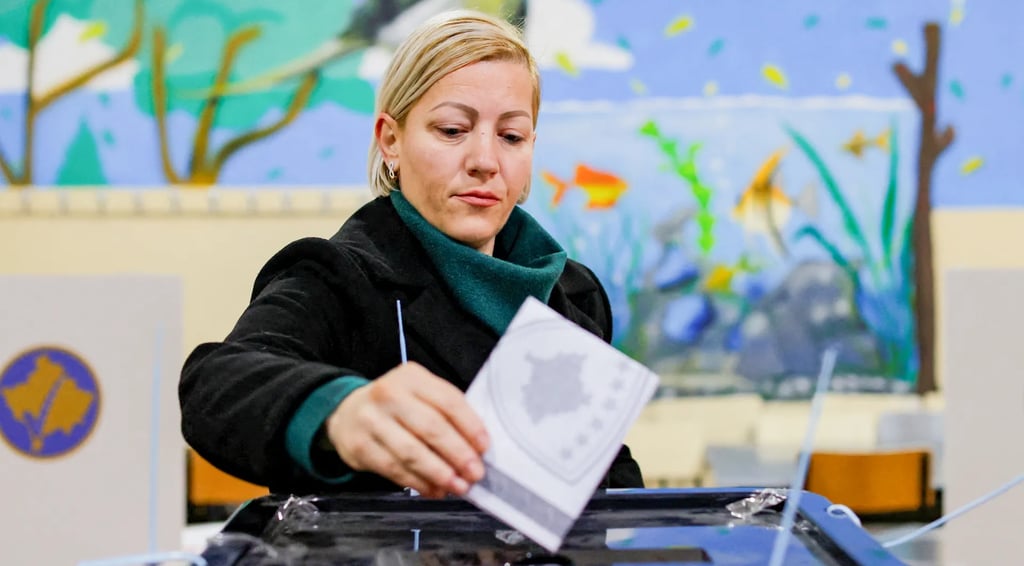
Kosovo returned to the polls on 7 June 2026 for its third parliamentary election in less than eighteen months, continuing an extraordinary cycle of voting and political uncertainty. The low participation revealed growing electoral fatigue (lodhje zgjedhore), public disillusionment (zhgënjim) and declining turnout (pjesëmarrje zgjedhore) among citizens who have repeatedly been asked to decide the country’s political future. Lëvizja Vetëvendosje, or LVV, again emerged as the largest party, continuing a pattern of electoral strength that has lasted since 2019. Yet its reduced share of the vote also showed that leading an election is not the same as securing enough support to govern alone.
The June election followed previous votes in February and December 2025, both of which failed to create a stable and lasting political settlement. Kosovo’s central problem has not been the absence of elections, but the inability of leading parties to transform results into durable cooperation. The country has faced political fragmentation (fragmentim), parliamentary deadlock (bllokadë) and weak governability (qeverisshmëri) as parties struggle to agree on leadership, coalitions, and the basic operation of the Assembly. Repeated campaigns may allow citizens to express frustration, but they do not automatically solve the divisions that prevent institutions from functioning after the ballots are counted.
LVV’s result in June was still significant because it confirmed that Albin Kurti’s movement remains the strongest individual political force in Kosovo. However, a share of around 43% left the party far short of the parliamentary strength needed to control the Assembly independently or choose a president without broader agreement. The election therefore produced another complicated mandate (mandat), requiring coalition-building (ndërtim koalicioni) and renewed attention to political legitimacy (legjitimitet). A party may win the most votes, but a functioning democracy also depends on whether elected representatives can turn public support into legislation, budgets, oversight, and stable government.
The reduction in voter turnout was perhaps the most revealing part of the election. Only a little more than one third of registered voters participated, a much lower figure than in the December 2025 election and a warning sign for political leaders across the spectrum. Low turnout does not necessarily mean that citizens are indifferent to Kosovo’s future; it can also reflect disappointment, exhaustion, or a belief that another vote will not change the outcome. The result raises concerns about democratic representation (përfaqësim), political pluralism (pluralizëm) and institutional accountability (llogaridhënie) because democracy is weakened when large parts of the electorate no longer believe participation is worthwhile.
Many Kosovars have watched parties argue for months over positions, procedures, and leadership while urgent public issues have remained unresolved. The country needs laws, municipal budgets, public investment, education reform, healthcare improvements, and reliable public services, but prolonged political disputes can delay each of these priorities. In this context, citizens may conclude that politicians are more effective at campaigning than governing. The problem becomes especially serious when political allocation (ndarje fondesh), possible patronage (patronazh) and public scrutiny (shqyrtim) become subjects of controversy during election periods.
The debate over support for diaspora flight routes illustrates this difficulty. A government programme intended to improve air connections for citizens abroad may have a legitimate economic or social purpose, particularly in a country where diaspora communities remain important to family life, remittances, investment, and elections. However, when a major spending decision is announced shortly before a vote, critics may reasonably ask whether it is a public policy measure or a political strategy. This uncertainty becomes more damaging in a system already affected by institutional paralysis (paralizë institucionale), weak oversight (mbikëqyrje) and broad executive discretion (diskrecion). Clear criteria, public documentation, and independent review are therefore essential if governments want to protect public trust.
Kosovo’s domestic political crisis also has international consequences. The European Union has repeatedly linked progress in Kosovo’s relationship with Serbia to wider regional stability and both countries’ European aspirations. The EU-facilitated dialogue is intended to advance the normalisation (normalizim) of relations, but progress has remained limited and politically difficult. This creates pressure through European conditionality (kushtëzim) and slows the broader process of European integration (integrim). When Kosovo’s institutions are unable to function effectively at home, it becomes harder for the country to demonstrate the political consistency needed to advance externally.
Relations with Kosovo’s Serb minority remain another sensitive issue. Kosovo must protect its sovereignty and constitutional order while also ensuring that Serb citizens can live safely, access public services, participate in local institutions, and retain confidence in their rights. This requires serious work on minority rights (të drejtat e pakicave), democratic reciprocity (reciprocitet) and local de-escalation (çtensionim). A lasting settlement cannot be achieved through unilateral political gestures alone, nor through policies that leave communities feeling excluded from the institutions meant to represent them.
The United States has also expressed frustration with political developments in Kosovo. Washington suspended its planned Strategic Dialogue with Pristina in 2025, citing concern about actions that it believed were increasing instability and complicating cooperation. The episode showed how domestic political decisions can affect a country’s strategic dialogue (dialog strategjik), create diplomatic friction (fërkim diplomatik) and weaken international credibility (besueshmëri). Kosovo depends heavily on its international partnerships, particularly with the United States, the European Union, and NATO members, so maintaining confidence with allies remains an important part of its national interest.
The central challenge for Kosovo’s political leaders is not simply to win another election. They must demonstrate that political competition can be followed by cooperation, even among parties with deeply different priorities and public identities. This requires democratic deliberation (diskutim i arsyetuar), practical compromise (kompromis) and genuine statesmanship (burrështetësi). Citizens do not expect political rivals to agree on everything, but they do expect them to recognise when national institutions are too important to be held hostage by partisan conflict.
Kosovo’s political system still has important strengths. Elections are competitive, civil society remains active, journalists continue to scrutinise power, and many citizens remain deeply engaged with the country’s future even when they choose not to vote. The task now is to turn this potential into stronger democratic resilience (qëndrueshmëri), governmental responsiveness (reagueshmëri) and broader civic participation (pjesëmarrje). This means listening seriously to citizens’ concerns about jobs, living costs, corruption, public services, education, and the need for a more predictable future.
The June election should therefore be seen as a warning rather than merely another political result. LVV’s first-place finish confirms its influence, but the lower turnout and lack of an independent majority show that Kosovo’s political crisis cannot be resolved by one party alone. The country needs institutional reform (reformë), stronger social cohesion (kohezion) and a credible programme of democratic renewal (ripërtëritje demokratike). Without these changes, future elections may continue to reproduce the same frustration, while Kosovo’s citizens wait for a political system that can finally turn voting into effective government.
Key Albanian Vocabulary
lodhje zgjedhore electoral fatigue
zhgënjim disillusionment
pjesëmarrje zgjedhore turnout
fragmentim fragmentation
bllokadë deadlock
qeverisshmëri governability
mandat mandate
ndërtim koalicioni coalition-building
legjitimitet legitimacy
përfaqësim representation
pluralizëm pluralism
llogaridhënie accountability
ndarje fondesh allocation
patronazh patronage
shqyrtim scrutiny
paralizë institucionale institutional paralysis
mbikëqyrje oversight
diskrecion discretion
normalizim normalisation
kushtëzim conditionality
integrim integration
të drejtat e pakicave minority rights
reciprocitet reciprocity
çtensionim de-escalation
dialog strategjik strategic dialogue
fërkim diplomatik diplomatic friction
besueshmëri credibility
diskutim i arsyetuar deliberation
kompromis compromise
burrështetësi statesmanship
qëndrueshmëri resilience
reagueshmëri responsiveness
pjesëmarrje participation
reformë reform
kohezion cohesion
ripërtëritje demokratike democratic renewal
For requests or suggestions: pr@learnalbanian.org

Go Your Own Way
© 2026 All rights reserved
Learn the official language of Albania and Kosovo in 30 days thanks to our complete Grammar, Vocabulary and Culture courses. Start speaking Albanian today!