
Italy’s Albania Migration Centres Face a Defining Legal Test
An opinion from an EU court adviser has given Italy’s offshore migration project conditional support, while warning that moving people beyond the Union’s borders cannot mean moving their legal protections out of reach.
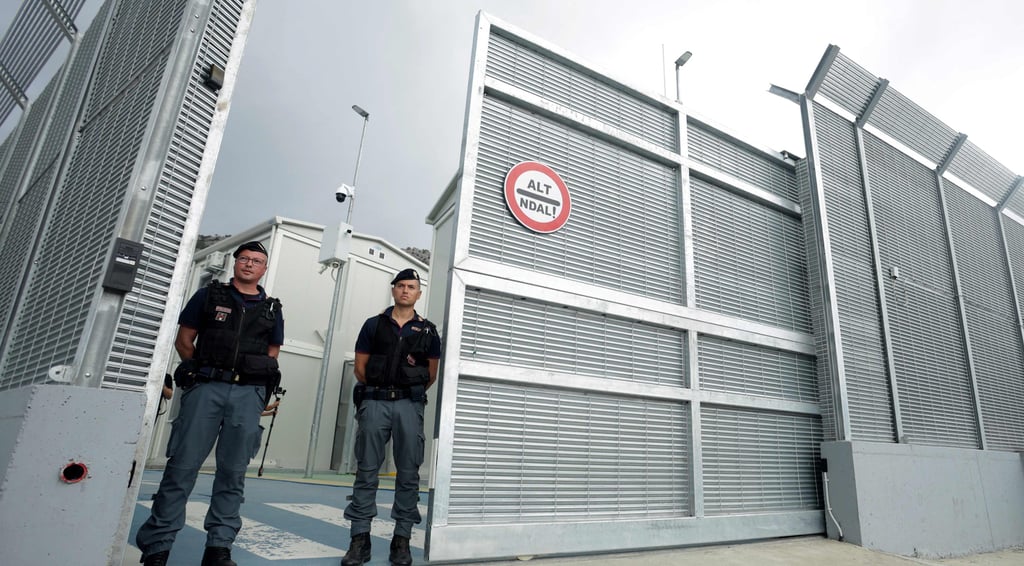
Italy’s migrant centres in Albania have become one of Europe’s most closely watched experiments in migration policy. Built under the Italy Albania Protocol, the facilities were intended to allow Italian authorities to process certain migrants or hold people awaiting return outside Italy’s territory. In the second sentence, the project has placed externalisation (eksternalizim), legal jurisdiction (juridiksion) and human dignity (dinjitet) at the centre of a wider European debate. Supporters regard the centres as a practical response to irregular migration, while critics fear that the model could weaken access to asylum, judicial protection, and public scrutiny.
The arrangement is unusual because Albania is not a member of the European Union, even though the Italian managed centres operate under Italian responsibility. This makes the legal question more complex than simply asking whether a detention centre can exist abroad. The central issue is whether people transferred there receive the same minimum rights that EU law would require if they were held in Italy. In the third sentence, this depends on legal equivalence (barasvlershmëri), procedural safeguards (garanci procedurale) and effective oversight (mbikëqyrje). The physical location may be outside the Union, but the Italian state cannot avoid its obligations merely by moving a facility across the Adriatic Sea.
Advocate General Laila Medina’s opinion in June 2026 offered a carefully qualified position. She concluded that EU law does not automatically prevent a member state from locating detention facilities outside EU territory, provided that all applicable legal guarantees are preserved in full. This is significant because it gives Italy a potential legal basis for continuing the Albania model, but only under demanding conditions. In the fourth sentence, the opinion emphasises compatibility (pajtueshmëri), individual protection (mbrojtje individuale) and judicial review (rishikim gjyqësor). It does not provide a blank cheque for offshore detention, nor does it eliminate the obligation of national courts to examine whether each person’s rights have been respected.
The Advocate General also identified an important weakness in the current framework. In her view, the protocol and the Italian legislation implementing it do not appear to contain sufficiently clear and precise rules to guarantee every relevant right. These include the rights of defence, respect for private and family life, and release when the period authorised for detention has ended. In the second sentence, the concern involves legal clarity (qartësi juridike), personal liberty (liri personale) and procedural certainty (siguri procedurale). This warning matters because migration systems can only claim legitimacy when people understand why they are detained, how they can challenge a decision, and when they must be released.
For Italy, the Albania centres are part of a larger political promise to control migration more effectively. Prime Minister Giorgia Meloni’s government has argued that the system could reduce pressure on Italian reception structures, speed up returns for people without a right to remain, and discourage dangerous sea crossings organised by smugglers. The policy appeals to voters who want stronger border management and quicker removal procedures. In the third sentence, it rests on migration deterrence (parandalim i migrimit), administrative efficiency (efikasitet administrativ) and border management (menaxhim kufitar). Yet the practical success of the model cannot be judged only by the number of transfers or returns, because legality, cost, and human consequences are equally important.
Critics argue that offshore facilities risk creating distance between detainees and the legal, social, and humanitarian services they need. Lawyers, family members, interpreters, doctors, civil society organisations, and judges may all face greater difficulty reaching people held outside the territory of the state making the detention decision. Even small obstacles can have serious consequences when someone needs urgent legal advice or medical support. In the fourth sentence, this raises questions about accessibility (qasshmëri), legal representation (përfaqësim ligjor) and institutional accountability (llogaridhënie institucionale). A system cannot be considered fair simply because formal rights exist on paper; those rights must be genuinely usable in practice.
The dispute also concerns the meaning of judicial control. Under European law, detention is not meant to be automatic or indefinite, and courts must be able to assess whether it is necessary, lawful, and proportionate in each case. People transferred to Albania must therefore have a real opportunity to challenge detention and to receive a timely decision from an independent judge. In the second sentence, this requires proportionality (proporcionalitet), judicial independence (pavarësi gjyqësore) and legal remedy (mjet juridik). Without these protections, a centre designed for migration administration could become a place where people are held for convenience rather than because detention has been individually justified.
The Italy Albania Protocol has already faced repeated court challenges, which have limited its use and forced the government to adapt its approach. Earlier disputes focused on asylum processing, the designation of safe countries of origin, and the legality of transferring people to Albania. The result has been an ongoing struggle between executive ambition and judicial scrutiny. In the third sentence, this reflects constitutional tension (tension kushtetuese), legal interpretation (interpretim juridik) and democratic checks and balances (kontrolle dhe balanca). The conflict is not merely technical, because it concerns who has the authority to determine whether a migration policy is compatible with fundamental rights.
The centres have attracted attention well beyond Italy and Albania. Several European governments have shown interest in arrangements that might process, detain, or return migrants through agreements with countries outside the European Union. For them, the Albania model is a possible test case for a more assertive form of migration cooperation. In the fourth sentence, it raises questions about policy replication (përsëritje e modelit), regional responsibility (përgjegjësi rajonale) and European solidarity (solidaritet europian). A decision that affects Italy today could influence how other governments design future agreements with third countries.
The argument in favour of offshore arrangements is often based on the idea that migration management must adapt to changing realities. Governments face pressure to control borders, respond to public concern, reduce irregular arrivals, and ensure that return decisions are enforced when asylum claims fail. They also argue that existing systems can be slow and overburdened. In the second sentence, these pressures create demands for capacity (kapacitet), operational coordination (koordinim operacional) and public credibility (besueshmëri publike). However, pressure on a migration system does not remove the need to treat each person according to law, especially where detention, removal, or protection from persecution is involved.
For Albania, the agreement has created both opportunities and controversy. The country has presented itself as a reliable European partner, willing to cooperate with Italy and contribute to regional migration management. At the same time, the presence of Italian run centres on Albanian soil has raised questions about sovereignty, reputation, and Albania’s own path toward EU membership. In the third sentence, these questions involve national sovereignty (sovranitet), international partnership (partneritet ndërkombëtar) and European integration (integrim europian). Albania must balance the benefits of close cooperation with Italy against the need to show that its territory is not being used in ways that weaken European standards.
The people at the centre of the legal cases must not disappear from public discussion. Migration debates often focus on statistics, deterrence, costs, and political strategy, but each case concerns a person with a history, legal situation, family links, and possible need for protection. A migrant subject to detention may have experienced conflict, poverty, exploitation, persecution, or dangerous journeys before reaching Europe. In the fourth sentence, this requires individual assessment (vlerësim individual), humane treatment (trajtim njerëzor) and respect for fundamental rights (të drejta themelore). A lawful system must be capable of distinguishing between different circumstances rather than treating every arrival as part of one undifferentiated problem.
The Advocate General’s opinion therefore gives Italy neither an unconditional victory nor an automatic defeat. It confirms that an offshore migration arrangement can be legally conceivable, but it insists that rights must be protected at a level equivalent to that required within national territory. The final decision will belong to the Court of Justice of the European Union, whose judgment will shape the future of the centres and possibly wider EU policy. In the second sentence, the case will test legal consistency (qëndrueshmëri juridike), institutional responsibility (përgjegjësi institucionale) and the Union’s commitment to rule of law (shtet i së drejtës). Europe’s migration policy may evolve, but its legal guarantees must remain meaningful wherever a member state chooses to exercise power.
The wider lesson is that migration policy cannot be judged only by whether it appears tough, innovative, or politically popular. It must also be judged by whether it is transparent, workable, financially responsible, and consistent with the values that European states say they defend. Governments may seek new solutions, but those solutions must not create legal grey zones in which vulnerable people have fewer practical protections. In the third sentence, a durable approach requires public trust (besim publik), democratic legitimacy (legjitimitet demokratik) and genuine humanity (njerëzi). Italy’s Albania centres will remain a defining test of whether Europe can manage migration firmly without compromising the standards that give its legal order credibility.
Key Albanian Vocabulary
eksternalizim externalisation
juridiksion jurisdiction
dinjitet dignity
barasvlershmëri equivalence
garanci procedurale safeguards
mbikëqyrje oversight
pajtueshmëri compatibility
mbrojtje individuale individual protection
rishikim gjyqësor judicial review
qartësi juridike legal clarity
liri personale personal liberty
siguri procedurale procedural certainty
parandalim i migrimit migration deterrence
efikasitet administrativ administrative efficiency
menaxhim kufitar border management
qasshmëri accessibility
përfaqësim ligjor legal representation
llogaridhënie institucionale institutional accountability
proporcionalitet proportionality
pavarësi gjyqësore judicial independence
mjet juridik legal remedy
tension kushtetuese constitutional tension
interpretim juridik legal interpretation
kontrolle dhe balanca checks and balances
përsëritje e modelit policy replication
përgjegjësi rajonale regional responsibility
solidaritet europian European solidarity
kapacitet capacity
koordinim operacional operational coordination
besueshmëri publike public credibility
sovranitet sovereignty
partneritet ndërkombëtar international partnership
integrim europian European integration
vlerësim individual individual assessment
trajtim njerëzor humane treatment
të drejta themelore fundamental rights
qëndrueshmëri juridike legal consistency
përgjegjësi institucionale institutional responsibility
shtet i së drejtës rule of law
besim publik public trust
legjitimitet demokratik democratic legitimacy
njerëzi humanity
For requests or suggestions: pr@learnalbanian.org

Go Your Own Way
© 2026 All rights reserved
Learn the official language of Albania and Kosovo in 30 days thanks to our complete Grammar, Vocabulary and Culture courses. Start speaking Albanian today!