
Diaspora Flights and Election Trust in Kosovo
The decision to allocate €2 million for air routes serving Kosovo’s diaspora triggered a sharp political dispute because it arrived shortly before a parliamentary election, raising wider questions about public spending, equal access, and democratic confidence.

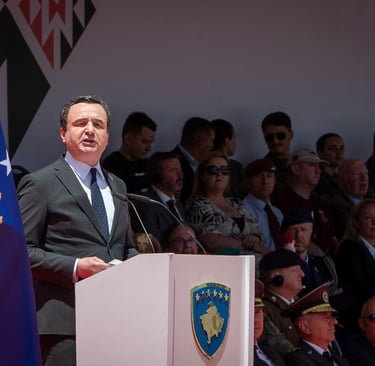
Kosovo’s decision to allocate €2 million for air routes serving its diaspora sparked immediate controversy because of the timing of the measure. The policy was announced by the acting government shortly before the 7 June 2026 parliamentary election, when every public decision was likely to be interpreted through a political lens. In its second sentence, the debate involved the diaspora community (komunitet), electoral neutrality (neutralitet zgjedhor) and public expenditure (shpenzime publike). Although the measure was formally presented as support for flight connections to destinations used by Kosovo citizens abroad, opposition parties argued that it could make travel easier for a group widely viewed as politically important.
The controversy does not mean that support for the diaspora is automatically improper. Kosovo’s diaspora has long played an important economic, social, and political role in the country, sending money to relatives, investing in property, maintaining family connections, and participating in elections from abroad. The key issue is whether a public subsidy announced close to an election can be clearly separated from campaign interests. In its third sentence, this requires careful scrutiny (shqyrtim), institutional legitimacy (legjitimitet) and public transparency (transparencë). A government may have valid reasons for supporting air connectivity, but it must also show that the decision follows an established policy rather than a short-term political calculation.
The government described the funding as part of its Economic Recovery Package, under a measure intended to support the diaspora through routes serving destinations where Kosovo citizens live abroad. Supporters of the decision argued that many governments subsidise routes, particularly where commercial airlines may reduce service because of lower profitability or seasonal changes in demand. They suggested that financial help could protect important travel links during the summer period, when diaspora visits support families, businesses, and tourism. In its fourth sentence, the debate concerns a transport subsidy (subvencion), policy continuity (vazhdimësi) and economic connectivity (lidhshmëri). The challenge is that even a policy with a legitimate long-term purpose can appear politically suspicious when it is introduced immediately before voters go to the polls.
Opposition critics described the allocation as an attempt to influence voters outside Kosovo. Their argument was based on the fact that diaspora citizens are a significant electoral constituency and have often been seen as supportive of Prime Minister Albin Kurti’s Vetëvendosje movement. In its second sentence, the allegation raised concerns about political instrumentalisation (instrumentalizim), electoral advantage (avantazh zgjedhor) and administrative power (pushtet administrativ). However, an allegation of vote buying requires evidence that public funds were designed or used to influence a specific vote, rather than simply being directed toward a policy area that happens to affect people who are eligible to vote.
This distinction is important in every democracy. Governments regularly make decisions about pensions, wages, transport, health care, student support, infrastructure, and public services, including during election periods. Not every measure that benefits voters is automatically an abuse of power. In its third sentence, the relevant principles are proportionality (proporcionalitet), procedural fairness (drejtësi procedurale) and public accountability (llogaridhënie). The central question is whether the policy was planned, openly justified, applied on equal terms, and capable of being audited after the election.
A flight support programme could be legitimate if it is based on transparent criteria. For example, authorities could explain which routes qualify, how airlines are selected, what passenger groups are expected to benefit, how long the support will last, and what economic results are anticipated. In its fourth sentence, these details require administrative disclosure (zbulim publik), financial traceability (gjurmueshmëri financiare) and clear eligibility (kualifikueshmëri). Without such information, citizens may struggle to determine whether the money is intended to strengthen a transport network or to create a visible benefit for politically significant voters.
The timing of the decision made public suspicion more likely. Kosovo had entered another election after a prolonged institutional deadlock, and many voters were already frustrated by repeated campaigns, political disagreement, and delays in forming stable institutions. In its second sentence, this atmosphere created voter fatigue (lodhje politike), public mistrust (mosbesim publik) and heightened polarisation (polarizim). In such conditions, even ordinary government activity can be interpreted as partisan manoeuvring because citizens are sensitive to any sign that state resources are being used to favour those in power.
Diaspora participation adds another layer to the discussion. Kosovo has a large population living in European countries and elsewhere, with many people maintaining close ties to their families and hometowns. Their financial contributions through remittances remain important for household income and the wider economy. In its third sentence, this creates transnational interdependence (ndërvarësi), social representation (përfaqësim) and democratic participation (pjesëmarrje). Supporting the diaspora is therefore not simply a symbolic gesture, because it concerns citizens whose lives, work, and financial contributions stretch across national borders.
At the same time, diaspora voters should not be treated as a single political bloc. People abroad hold different views on economic policy, dialogue with Serbia, public services, employment, corruption, and Kosovo’s European future. Their voting choices can be influenced by family experiences, political beliefs, media exposure, professional backgrounds, and personal hopes for the country. In its fourth sentence, reducing them to one predictable electorate encourages stereotyping (stereotipizim), political simplification (thjeshtësim) and democratic distortion (shtrembërim). A credible public debate should respect their right to vote without assuming that travel support automatically determines how they will vote.
The controversy also raises questions about the role of an acting government. A government operating in a technical or caretaker capacity must continue to manage the state, pay public employees, maintain services, respond to emergencies, and make decisions that cannot simply be postponed. Yet it must also avoid actions that could permanently bind a future government or create an unfair campaign advantage. In its second sentence, this requires constitutional restraint (vetëpërmbajtje), institutional balance (balancë institucionale) and legal certainty (siguri juridike). The closer a decision is to election day, the stronger the expectation that it will be limited, necessary, and fully explained.
There are practical arguments in favour of better flight connections. Diaspora families often face high summer prices, limited direct routes, crowded airports, and uncertainty about whether they can travel home for holidays, funerals, weddings, family obligations, or business matters. Better air routes may also benefit tourism, trade, students, and foreign investors. In its third sentence, the wider benefits involve regional mobility (lëvizshmëri), economic feasibility (realizueshmëri) and social accessibility (aksesueshmëri). These are legitimate public-policy goals, but they should be pursued through a programme designed well before an election and assessed according to measurable results.
For that reason, the most constructive response is neither to assume corruption nor to dismiss all criticism as political theatre. Kosovo needs stronger standards for announcing, funding, and reviewing public measures during campaign periods. In its fourth sentence, this should include independent oversight (mbikëqyrje), transparent procurement (prokurim) and meaningful consultation (konsultim). Such safeguards would protect both voters and governments by making it easier to distinguish a genuine public-interest programme from one that risks being perceived as electoral patronage.
The June 2026 election showed that Kosovo’s political difficulties did not end with one campaign. Vetëvendosje emerged as the largest party, but it did not secure enough support to govern alone, leaving coalition-building and compromise essential. In its second sentence, the result underlined the need for political cooperation (bashkëpunim), institutional stability (stabilitet institucional) and democratic compromise (kompromis). For citizens at home and abroad, confidence in elections depends not only on the final vote count but also on the belief that public resources are administered fairly before, during, and after a campaign.
The diaspora flight subsidy therefore became significant because it touched several sensitive issues at once: public money, migration, elections, political trust, and the relationship between Kosovo and its citizens abroad. A transparent programme could strengthen those ties and make travel more accessible for families who remain connected to Kosovo. In its third sentence, a weakly explained programme can instead create public suspicion (dyshim), institutional fragility (brishtësi institucionale) and electoral controversy (kontest zgjedhor). The lasting lesson is that policies affecting voters must be designed and communicated in ways that make their public purpose unmistakable.
Key Albanian Vocabulary
komunitet community
neutralitet zgjedhor electoral neutrality
shpenzime publike public expenditure
shqyrtim scrutiny
legjitimitet legitimacy
transparencë transparency
subvencion subsidy
vazhdimësi continuity
lidhshmëri connectivity
instrumentalizim instrumentalisation
avantazh zgjedhor electoral advantage
pushtet administrativ administrative power
proporcionalitet proportionality
drejtësi procedurale procedural fairness
llogaridhënie accountability
zbulim publik disclosure
gjurmueshmëri financiare financial traceability
kualifikueshmëri eligibility
lodhje politike voter fatigue
mosbesim publik public mistrust
polarizim polarisation
ndërvarësi interdependence
përfaqësim representation
pjesëmarrje participation
stereotipizim stereotyping
thjeshtësim simplification
shtrembërim distortion
vetëpërmbajtje restraint
balancë institucionale institutional balance
siguri juridike legal certainty
lëvizshmëri mobility
realizueshmëri feasibility
aksesueshmëri accessibility
mbikëqyrje oversight
prokurim procurement
konsultim consultation
bashkëpunim cooperation
stabilitet institucional institutional stability
kompromis compromise
dyshim suspicion
brishtësi institucionale institutional fragility
kontest zgjedhor electoral controversy
For requests or suggestions: pr@learnalbanian.org

Go Your Own Way
© 2026 All rights reserved
Learn the official language of Albania and Kosovo in 30 days thanks to our complete Grammar, Vocabulary and Culture courses. Start speaking Albanian today!